
Platypalpus discifer
Loew, 1863
hybotid dance fly
Platypalpus discifer is a of hybotid dance fly first described by Loew in 1863. As a member of the Hybotidae, it belongs to a group of small predatory flies formerly classified within Empididae. The Platypalpus is characterized by distinctive morphological features including a small spherical relative to body size. Like other hybotids, this species is predatory as an and is associated with specific microhabitats for feeding.
Pronunciation
How to pronounce Platypalpus discifer: /ˌplætɪˈpalpəs ˈdɪsɪfər/
These audio files are automatically generated. While they are not always 100% accurate, they are a good starting point.
Identification
Hybotid dance flies can be distinguished from similar small predatory flies by their disproportionately small, spherical and large . They differ from Empididae (empidid dance flies) by subtle morphological characters now used to separate the , though this distinction is adopted more readily in European than in North American practice. From robber flies (Asilidae), they differ in their much smaller size and less robust build. -level identification within Platypalpus requires examination of minute characters such as setal arrangement and genital .
Images
Appearance
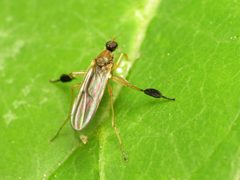
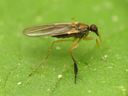
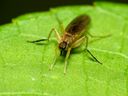
are small dipterans, approximately 4 millimeters in length. The is notably small and spherical relative to the body, with large occupying most of the head surface. The body is compact with relatively robust proportions. Front legs may show modifications for prey capture, with enlarged in some . Overall appearance resembles small robber flies (Asilidae).
Habitat
Specific microhabitat preferences for this are not documented, but and related hybotids occupy diverse including tree trunks, ground surfaces, foliage, water surfaces, and the vicinity of insect such as those attracted to garbage or organic matter.
Distribution
United States.
Seasonality
Spring, based on general patterns for hybotid dance flies in North America.
Diet
are predatory, seizing small insects and other arthropods with modified front legs. Prey is subdued with a piercing ; extraoral digestion occurs through injected , with liquefied tissues then consumed. Larval diet is presumed but not confirmed for this .
Life Cycle
Complete with , larval, pupal, and stages. Larval is poorly known for most hybotids; larvae of related occupy diverse microhabitats including leaf litter, , fungi, roots, and aquatic or semiaquatic environments.
Behavior
are visual with acute eyesight. Males of many hybotid form mating swarms where individuals bounce or 'dance' in mid-air over prominent objects, giving the group its . Whether P. discifer exhibits this specifically has not been documented.
Ecological Role
of small insects and arthropods in its microhabitat. Contributes to regulation of of other small dipterans and .
Human Relevance
Of no known economic importance. Not a pest or beneficial in documented contexts.
Similar Taxa
- Empididae (empidid dance flies)Formerly classified together; separated based on subtle morphological differences, though taxonomic treatment varies regionally
- Asilidae (robber flies)Similar predatory habit and general appearance, but substantially larger and more robust with different proportions
- Hybos spp.Congeneric or closely related hybotids with similar and habits; distinguished by specific structural characters