
Telmatogeton
Schiner, 1866
Seaweed Midges
Species Guides
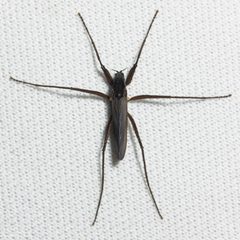
2- Telmatogeton alaskensis(Yakutat Seaweed Midge)
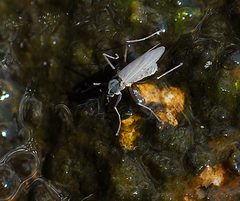
- Telmatogeton japonicus
Telmatogeton is a of non-biting midges in the Chironomidae, comprising approximately 21 described distributed across marine intertidal, freshwater torrential, and inland saline . Species exhibit diverse ecological specializations: some are torrenticolous inhabitants of high-velocity stream substrates, others are intertidal flightless restricted to specific tidal zones, and at least one species occurs in the Caspian Sea basin. The genus is notable for its osmoregulatory adaptations and flow-dependent strategies.
Pronunciation
How to pronounce Telmatogeton: /tɛlˌmætəˈdʒiːtɒn/
These audio files are automatically generated. While they are not always 100% accurate, they are a good starting point.
Identification
Larvae can be distinguished from other by their association with specific high-energy aquatic : torrenticolous occupy cascade and waterfall splash zones with characteristic attachment to substrates under high-velocity, shallow flow conditions; intertidal species are flightless as and restricted to mid- to low-tide zones with filamentous associations. Adult Telmatogeton magellanicus are notably flightless with extremely active during brief low-tide periods. Specific larval morphological diagnostic features require examination of detailed taxonomic keys; the genus was newly recorded for Egyptian Mediterranean fauna in 2019 based on larval collections.
Images
Habitat
Highly variable across : torrenticolous species (e.g., T. torrenticola) inhabit high-gradient streams with bottom velocities of 13.4–64.2 cm s⁻¹ and depths of 1.5–50 cm, particularly cascade and waterfall splash zones with periphyton ; intertidal species (e.g., T. magellanicus) occupy mid- to low-tide zones of marine coasts, strongly associated with filamentous (Bostrychia spp., Ulva spp.) and stable boulders, with distribution limited by relative humidity; at least one species (Telmatogeton sp.) occurs in the inland Caspian Sea basin, possibly representing natural Ponto-Caspian distribution or Black Sea invasion.
Distribution
Widespread but patchy: Hawaiian Islands (T. torrenticola, ); Navarino Island, Tierra del Fuego, Chile (T. magellanicus); Caspian Sea basin; Mediterranean coast of Egypt (first recorded 2019); Marion Island (Southern Ocean); Japan; Alaska; Australia; and Atlantic islands. GBIF records indicate presence in Denmark, Norway, and Sweden.
Diet
Telmatogeton torrenticola larvae feed on periphyton . Other ' diets are not documented.
Life Cycle
Telmatogeton torrenticola exhibits a multivoltine, asynchronous with continuous ; all instars and pupae present on most sampling dates, with instar distribution varying by microhabitat quality and stream discharge. Pupae are rare in suboptimal . Telmatogeton magellanicus emerge during single low-tide periods with approximately three hours to complete mating and oviposition before tidal inundation.
Behavior
Telmatogeton torrenticola larvae show strong microhabitat fidelity with positively correlated to Froude number and high bottom water velocities; is precluded in suboptimal under reduced stream flow. Telmatogeton magellanicus display extremely active during brief periods, interpreted as high energy expenditure to complete within limited tidal windows. Larvae of intertidal require specific substrate stability and algal associations.
Ecological Role
Telmatogeton torrenticola serves as a flow-sensitive indicator of hydrological disturbance in tropical mountain streams. Intertidal contribute to intertidal structure in association with filamentous . The represents a distinct evolutionary lineage within Chironomidae, with phylogenetic position as sister to Chironominae + Orthocladiinae (though with low support).
Human Relevance
Potential bioindicator for stream flow regime changes and water diversion impacts; T. torrenticola specifically identified as vulnerable to reduced discharge from water diversions. No direct economic or medical significance documented.
Similar Taxa
- Other Chironomidae generaTelmatogeton is distinguished by its placement in Telmatogetoninae and specialized associations (torrenticolous streams, marine intertidal zones, inland saline waters) that differ from typical lentic or lotic habitats. Other chironomids rarely occupy extreme high-velocity splash zones or flightless intertidal .
More Details
Evolutionary significance
Telmatogetoninae represents a distinct with unique phylogenetic position; complete mitochondrial of Telmatogeton sp. is among the shortest (15,652 ) in Chironomidae, suggesting potential evolutionary reduction. The origin of Caspian Sea remains unresolved between natural Ponto-Caspian distribution and 20th-century Black Sea invasion.
Conservation concern
Hawaiian T. torrenticola is particularly vulnerable to stream flow alteration; larval densities (386.9–1178 m⁻²) are strongly flow-dependent, and water diversions could significantly reduce available .
Sources and further reading
- BugGuide
- Wikipedia
- GBIF taxonomy match
- iNaturalist taxon
- NCBI Taxonomy
- Catalogue of Life
- Larval habitat preference of the endemic Hawaiian midge, Telmatogeton torrenticola Terry (Telmatogetoninae)
- COMPLETE MITOCHONDRIAL GENOME OF TELMATOGETON SP. (DIPTERA: CHIRONOMIDAE) FROM THE CASPIAN SEA BASIN
- Life cycle of a torrenticolous Hawaiian chironomid (Telmatogeton torrenticola) : stream flow and microhabitat effects
- Life history and osmoregulatory ability of Telmatogeton amphibius (Diptera, Chironomidae) at Marion Island
- Telmatogeton Schiner, 1866 (Chironomidae: Diptera), a newly recorded genus of chironomid larva for the Egyptian Mediterranean Fauna
- Distribution and Habitat Preferences of the Newly Rediscovered Telmatogeton magellanicus (Jacobs, 1900) (Diptera: Chironomidae) on Navarino Island, Chile