
Chironominae
non-biting midges
Tribe Guides
3- Chironomini(non-biting midges)
- Pseudochironomus(nonbiting midge)
- Tanytarsini
Chironominae is a of non-biting midges (Diptera: Chironomidae) containing over 2,000 described across three tribes: Chironomini, Pseudochironomini, and Tanytarsini. Members are globally distributed and primarily aquatic in their stages. The subfamily includes economically and ecologically significant such as Chironomus, Polypedilum, and Tanytarsus. are characterized by reduced mouthparts and do not feed; larvae are diverse in specialization, ranging from freshwater lakes and rivers to marine environments and phytotelmata.
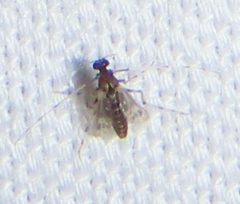
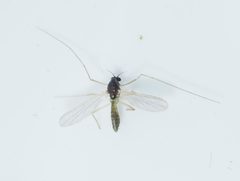
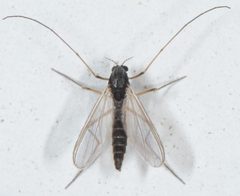
Pronunciation
How to pronounce Chironominae: //ˌkɪrəˈnɒmɪniː//
These audio files are automatically generated. While they are not always 100% accurate, they are a good starting point.
Identification
distinguished from other Chironomidae by reduced and (non-functional mouthparts), in males, and wing venation patterns. Tribe-level identification: Chironomini typically have simple tarsal claws; Tanytarsini possess distinctive pupal thoracic horns with variable branching patterns and often show more elaborate hypopygial structures in males; Pseudochironomini () have unique antennal characteristics. Larval identification relies on capsule , particularly tooth configuration, antenna segmentation, and presence/absence of abdominal tubules.
Images
Habitat
stages primarily aquatic: larvae and pupae inhabit freshwater lakes, rivers, streams, ponds, and wetlands. Some lineages occupy specialized : marine intertidal zones (Ainuyusurika), phytotelmata (water-filled plant axils such as Eryngium), and brackish waters. terrestrial but remain near water bodies.
Distribution
. Documented from all biogeographic regions including: Palearctic (Japan, China, Russian Far East, Europe), Nearctic (Canada, USA), Neotropical (Brazil, Argentina), Afrotropical, Oriental, and Australasian (Australia, Thailand) regions. Specific range extensions recorded for Saskatchewan (Chironomus atrella new to province; Chironomus paganus new to Canada).
Diet
do not feed; mouthparts reduced and non-functional. Larval feeding habits diverse but specific dietary data for as a whole not documented in available sources.
Life Cycle
Holometabolous development with four stages: , larva, pupa, . Larval stage aquatic, with four instars. occurs in water; adults emerge synchronously in mating swarms. documented in some (e.g., Polypedilum parthenogeneticum).
Behavior
form mating swarms, typically at dusk, often over water or near larval . Males possess for detecting female . Some larvae exhibit tube-building using salivary secretions and detritus. Larval abdominal tubules present in most but absent in some lineages; tubule absence previously associated with salinity but also observed in freshwater environments.
Ecological Role
Larvae are significant components of aquatic , serving as primary consumers and prey for fish and . Important bioindicators of water quality; reflect environmental conditions including salinity, oxygen levels, and pollution. Some species contribute to nutrient cycling through bioturbation.
Human Relevance
Larvae widely used in biomonitoring programs to assess aquatic health. Some can become nuisance pests when occurs in large numbers near human settlements. Chironomus and related studied in toxicological research. No transmission (non-biting).
Similar Taxa
- OrthocladiinaeAlso Chironomidae with aquatic larvae; distinguished by reduced or modified wing venation, different pupal respiratory organ structure, and typically colder-water preferences
- TanypodinaeThird major Chironomidae ; predatory larvae with distinctively different capsule , including retractile and different structure; lack male antennae
- Culicidae (mosquitoes)Superficially similar Diptera with aquatic larvae; distinguished by piercing-sucking mouthparts, scaled wings, and larval siphon for breathing at water surface
Sources and further reading
- BugGuide
- Wikipedia
- iNaturalist taxon
- NCBI Taxonomy
- Catalogue of Life
- Male description of the phytotelma-dwelling species Polypedilum parthenogeneticum (Chironomidae: Chironominae)
- Review of the Japanese Microtendipes (Diptera: Chironomidae: Chironominae), with description of a new species
- Chironomus rishii sp. n., an enigmatic non-biting midge (Diptera: Chironomidae: Chironominae) from Neotropical region
- Phylogeny of marine Ainuyusurika tuberculata (Tokunaga) (Diptera: Chironomidae: Chironominae), with description of the immature stages
- RANGE EXTENSIONS AND HABITAT DATA OF TWO CHIRONOMINAE (DIPTERA: CHIRONOMIDAE) FROM SASKATCHEWAN
- Some notes on taxonomy and distribution of Neotropical Aedokritus Roback and Axarus Roback (Diptera: Chironomidae: Chironominae)
- Description of the pupa of Tanytarsus alatus Paggi (1992) (Chironominae: Tanytarsini)