
Pholeomyia
Bilimek, 1867
freeloader flies
Species Guides
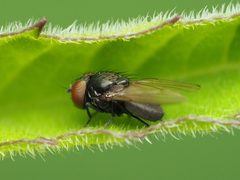
1Pholeomyia is a of freeloader flies in the Milichiidae, comprising more than 30 described . The genus is notable for its myrmecophilous associations, particularly with . At least one species, P. comans, has been documented as an in nests of Atta texana, where larvae develop in underground detritus cavities.
Pronunciation
How to pronounce Pholeomyia: /ˌfoʊliˈoʊmiə/
These audio files are automatically generated. While they are not always 100% accurate, they are a good starting point.
Identification
Members of Pholeomyia can be distinguished from other Milichiidae by features of the male terminalia and wing venation, though specific diagnostic characters vary among . The is part of the Milichiinae , which contains species generally lacking the reduced wing venation seen in some other milichiid subfamilies.
Images
Habitat
At least one (P. comans) inhabits underground nests of the Atta texana, specifically in detritus cavities where exhausted fungus garden substrate and nest refuse accumulate. The broader range for the is insufficiently documented.
Diet
Larvae of P. comans feed on exhausted fungus garden substrate and nest refuse in nests. feeding habits are not documented.
Host Associations
- Atta texana - P. comans enter nests to oviposit; larvae develop in detritus chambers
Life Cycle
P. comans has three larval instars. The third-stage larva and have been described. Puparia are formed in the nest environment. A diapriid has been reared from P. comans puparia, indicating pressure on this life stage.
Behavior
of P. comans actively enter nests to oviposit, demonstrating a myrmecophilous lifestyle. At least three mite (one uropodid, two macrochelid) have been observed as phoretic on adult P. comans, suggesting transport of these arthropods between ant nests.
Ecological Role
P. comans functions as a in nests, consuming exhausted fungal substrate and nest refuse. The also serves as a for and phoretic mites, potentially facilitating mite between colonies.
Similar Taxa
- MilichiaBoth belong to Milichiidae and share freeloader fly habits; Pholeomyia is distinguished by male genitalic and wing venation characters, and by documented myrmecophilous associations that are less prominent in Milichia
More Details
Phoretic mite fauna
P. comans carry at least three mite : one uropodid and two macrochelid mites. These phoretic associations may represent commensal or mutualistic relationships that aid mite among nest environments.