
Milichiinae
Genus Guides
3- Eusiphona(freeloader flies)
- Milichiella(freeloader flies)
- Pholeomyia(freeloader flies)
Milichiinae is a of small flies within the Milichiidae, commonly known as freeloader flies. These minute insects are frequently observed in association with predatory arthropods, particularly spiders, where they exploit captured prey. The subfamily comprises numerous with worldwide distribution.
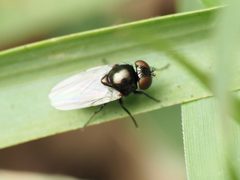
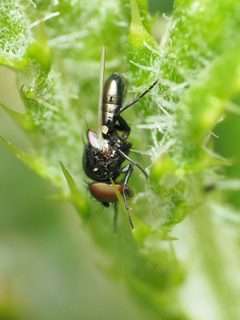
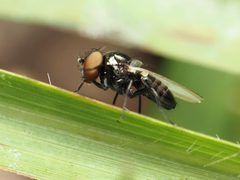
Pronunciation
How to pronounce Milichiinae: /mɪˈlɪki.aɪˌni/
These audio files are automatically generated. While they are not always 100% accurate, they are a good starting point.
Identification
Distinguished from other milichiid (Phyllomyzinae, Madizinae) by a combination of morphological features including chaetotaxy and male genitalia structure. Most reliably identified by their characteristic of aggregating near spiders and other . Separation from similar small acalyptrate flies requires examination of wing venation patterns and antennal structure. Definitive identification often requires dissection of male terminalia.
Images
Habitat
Diverse including forests, grasslands, wetlands, and human-modified environments. Frequently found in proximity to spider webs, nests, and other situations where predatory arthropods capture prey. often occur on vegetation, leaf litter, or decaying organic matter when not associated with .
Distribution
Worldwide distribution with records from all major biogeographic regions. Particularly well-documented in the Palearctic, Nearctic, and Neotropical regions. Absent only from the most isolated oceanic islands.
Seasonality
activity generally peaks during warmer months in temperate regions; tropical active year-round. Specific timing varies by latitude and local climate conditions.
Host Associations
- Spiders (Araneae) - commensalMilichiines frequently aggregate near spiders, feeding on prey fluids and liquefied tissues of captured insects without harming the spider. This kleptoparasitic relationship is the defining ecological feature of the group.
- Predatory Hymenoptera - commensalSome associate with predatory , exploiting their captured prey in a manner similar to spider associations.
Behavior
exhibit distinctive kleptoparasitic , hovering near or landing on spider webs and other predatory situations. When a captures prey, milichiines rapidly aggregate to feed on exuding fluids. This behavior makes them highly conspicuous despite their small size. is characteristically slow and hovering. When disturbed, individuals often fly short distances and return to the same or nearby predatory site.
Ecological Role
Act as commensals and kleptoparasites in -prey systems, potentially influencing nutrient flow from captured prey. Their presence may serve as an indicator of active by spiders and other arthropods. Role in decomposition and nutrient cycling when not associated with predators is poorly understood.
Human Relevance
No direct economic importance. Occasionally noticed by naturalists and photographers due to their conspicuous at spider webs. Serve as subjects for studies of commensalism and kleptoparasitism in insect- relationships.
Similar Taxa
- PhyllomyzinaeOther of Milichiidae; distinguished by different wing venation, chaetotaxy, and lack of consistent association with spider events
- MadizinaeOther of Milichiidae; morphologically distinct and not primarily kleptoparasitic on spiders
- CarnidaeSmall dark flies sometimes found in similar ; distinguished by different wing venation and lack of spider web association
More Details
Kleptoparasitism
The association with spiders is the most studied aspect of milichiine . Research has documented -specific relationships with particular spider and even individual spider species. The flies appear to use visual and chemical cues to locate active events.
Taxonomic history
Milichiinae has undergone significant taxonomic revision, with many transferred to or from related based on morphological and molecular data. Current classification reflects ongoing phylogenetic research.