
Atta texana
(Buckley, 1860)
Texas Leafcutter Ant, Town Ant, Parasol Ant, Fungus Ant, Cut Ant, Night Ant
Atta texana is a fungus-farming leafcutter and the northernmost in the Atta, distributed across Texas, Louisiana, and northeastern Mexico. Colonies are large and polygynous, containing several queens and up to several million . Foragers harvest leaf material from over 200 plant species to cultivate symbiotic fungus gardens, making this species a significant agricultural and ornamental pest capable of defoliating a citrus tree within 24 hours.
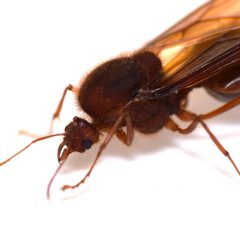
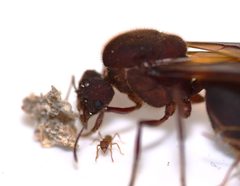
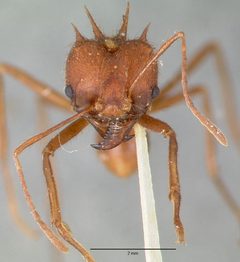
Pronunciation
How to pronounce Atta texana: /ˈæ.tə tɛkˈsɑː.nə/
These audio files are automatically generated. While they are not always 100% accurate, they are a good starting point.
Identification
The northernmost Atta ; distinguished from other leafcutter ants by its geographic range. exhibit with size-based task allocation—larger workers cut tough leaves while smaller workers handle softer vegetation. The species is , with "night " reflecting this activity pattern.
Images
Habitat
Found in central and southern Texas, Louisiana, and northeastern Mexico. Suitable occurs in upland areas; documented to shift to higher elevations following construction and flooding of lowland areas.
Distribution
Texas, Louisiana, and northeastern states of Mexico.
Seasonality
foraging activity. Seasonal foraging patterns documented, with leaf and toughness influencing plant selection.
Diet
Harvests leaves from over 200 plant to cultivate symbiotic fungus gardens. Corn is highly palatable and used in foraging studies.
Life Cycle
Colonies contain several queens (). exhibits size with task allocation based on body size.
Behavior
foraging. cut leaf material and transport it to underground fungus gardens. Foraging subject to historical scientific interest dating to A. R. Wallace. Size-based task : larger workers cut tough leaves efficiently, smaller workers cut soft vegetation efficiently.
Ecological Role
Major engineer through leaf harvesting and fungus . Creates extensive underground nest systems. Can denude vegetation patches, affecting plant structure.
Human Relevance
Considered a major pest of agricultural and ornamental plants. Capable of defoliating citrus trees in less than 24 hours. Economic impact on agriculture and landscaping in its range.
Similar Taxa
- Atta cephalotesOther leafcutter with similar fungus-farming ; distinguished by geographic distribution (tropical Central/South America vs. temperate/subtropical A. texana range).
- Atta sexdensNeotropical leafcutter with similar and task allocation; E.O. Wilson's studies on worker size in A. sexdens inform understanding of A. texana .
Sources and further reading
- BugGuide
- GBIF taxonomy match
- iNaturalist taxon
- NCBI Taxonomy
- Catalogue of Life
- Twostriped Slantfaced Grasshopper
- Grasshoppers of Colorado
- Grasshoppers of Colorado
- Species Records and Accounts
- Alfalfa Insects - AgriLife Extension Entomology
- Hay and Pasture Insects - AgriLife Extension Entomology
- The Foraging Ecology of Atta texana in Texas
- Upland Shift of Distribution of Suitable Habitat for the Texas Leaf-cutter Ant,Atta texana, in Southern Texas Following Reservoir Construction
- The Hymenopterous Poison Apparatus. X. Morphological and Behavioral Changes in Atta texana (Hymenoptera: Formicidae)
- Hymenopteran-specific TRPA channel from the Texas leaf cutter ant (Atta texana) is heat and cold activated and expression correlates with environmental temperature.