
Rhopalopterum
Duda, 1929
frit flies
Species Guides
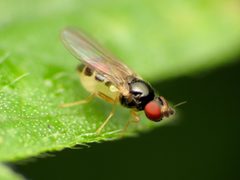
4Rhopalopterum is a of small frit flies in the Chloropidae, established by Duda in 1929. The genus contains approximately 10 described distributed primarily in the Holarctic region. Species within this genus are morphologically similar to other chloropids, with most described during the late 19th and early 20th centuries. The genus is taxonomically placed within the Oscinellinae and tribe Oscinisomatini.
Pronunciation
How to pronounce Rhopalopterum: /ˌroʊpəˈlɒptərəm/
These audio files are automatically generated. While they are not always 100% accurate, they are a good starting point.
Identification
Rhopalopterum can be distinguished from other Oscinellinae by genitalic characters, particularly male terminalia structures. External is generally conservative within the genus, making species-level identification difficult without microscopic examination. The genus shares the reduced chaetotaxy and general body plan typical of Chloropidae, with small size (approximately 2-4 mm body length) and characteristic wing venation patterns of frit flies.
Images
Distribution
Documented from northern Europe (Denmark, Norway, Sweden) and northeastern North America (Vermont, United States). The appears to have a transatlantic Holarctic distribution pattern, though records are sparse.
Similar Taxa
- OscinellaShares Oscinellinae and similar external ; distinguished by genitalic characters and chaetotaxy patterns
- ElachipteraOverlaps in general chloropid appearance; Rhopalopterum distinguished by specific wing and genitalic features
More Details
Taxonomic history
Most were originally described in other (particularly Oscinis and Chlorops) and later transferred to Rhopalopterum. The type species is Rhopalopterum soror (Macquart, 1851), originally described as Oscinis soror.
Species diversity
The approximately 10 described represent a relatively small within Chloropidae. No recent taxonomic revisions have been published, and the group may be understudied in regions between documented distribution records.