
Caryomyia spiniglobus
Gagné, 2008
Hickory Spiny Ball Gall Midge
Caryomyia spiniglobus is a gall midge in the Cecidomyiidae, described by Gagné in 2008. The "Hickory Spiny Ball Gall Midge" indicates its association with hickory trees and the distinctive gall structure it induces. As a member of the Caryomyia, this belongs to a group specialized in forming galls on Carya (hickory and pecan) species. The species is relatively recently described with limited published ecological data.
Pronunciation
How to pronounce Caryomyia spiniglobus: /ˌkɛəriˈoʊmiə ˌspɪnɪˈɡloʊbəs/
These audio files are automatically generated. While they are not always 100% accurate, they are a good starting point.
Identification
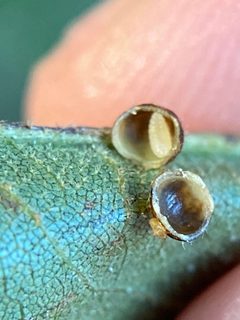
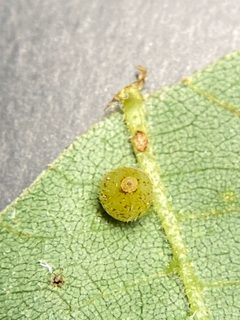
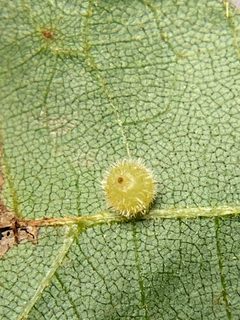
Distinguished from other Caryomyia by the spiny, spherical gall on hickory leaves or twigs. The gall surface bears pointed projections rather than the smooth or hairy surfaces typical of . identification requires examination of genitalic structures and comparison with . Separation from C. caryae and other hickory gall midges depends on gall form and microscopic features.
Images
Appearance
are minute flies typical of Cecidomyiidae, with reduced wing venation and bead-like with circumfilar loops. The name "spiniglobus" refers to the spiny, globular gall structure formed on plants. Larvae are small, legless, and maggot-like with a retractable sternal spatula.
Habitat
Associated with deciduous forests and woodlands containing hickory (Carya) . Occurs in environments where trees are established, including natural forests, riparian corridors, and suburban areas with native tree cover.
Distribution
Eastern North America, coincident with native ranges of Carya . Documented observations span the eastern United States where hickory species occur.
Seasonality
likely synchronized with hickory leaf flush in spring; galls visible from mid-summer through autumn. Larvae overwinter within galls, with and adult emergence the following spring. Specific timing undocumented.
Host Associations
- Carya - gall inducerForms galls on hickory ; specific species unconfirmed
Life Cycle
Induces formation of spiny, globular galls on hickory. Larvae develop within gall tissue, feeding on plant modified by their secretions. occurs within the gall. are short-lived and do not feed. Detailed undocumented.
Ecological Role
As a gall inducer, modifies plant tissue to create protected microhabitats for larval development. Galls may serve as resources for , , and within the gall . Contribution to nutrient cycling through gall unquantified.
Human Relevance
No direct economic significance. Galls cause minor aesthetic damage to ornamental hickories but do not threaten tree health. Occasionally noticed by naturalists and gall enthusiasts. Scientific value as a recently described with distinctive .
Similar Taxa
- Caryomyia caryaeAlso forms galls on hickory, but produces smooth or fuzzy spherical galls rather than spiny structures
- Caryomyia tubicolaForms tubular or spindle-shaped galls on hickory, readily distinguished by gall
- Caryomyia persicoidesAnother hickory-associated with different gall form
More Details
Etymology
The specific epithet "spiniglobus" combines Latin "spina" (thorn/spine) and "globus" (sphere/ball), directly describing the spiny spherical gall characteristic of this .
Taxonomic History
Described by Raymond Gagné in 2008, a leading in Cecidomyiidae . The was distinguished from previously described hickory gall midges based on gall and morphological features.