
Caryomyia persicoides
(Osten Sacken, 1862)
Hickory Peach-haired Gall Midge
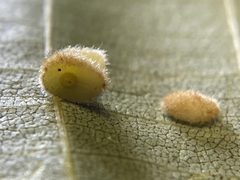
Caryomyia persicoides, commonly known as the hickory peach-haired gall midge, is a of gall midge in the Cecidomyiidae. The species induces galls on hickory trees (Carya species). It was first described by Osten Sacken in 1862. The refers to the distinctive peach-colored hairs found on the gall structure.
Pronunciation
How to pronounce Caryomyia persicoides: //ˌkæɹiːoʊˈmaɪə ˌpɜːsɪˈkɔɪdiːz//
These audio files are automatically generated. While they are not always 100% accurate, they are a good starting point.
Identification
The is associated with galls on hickory that bear peach-colored or pinkish hairs. Gall midge species within Caryomyia are distinguished primarily by their associations and gall rather than morphology. Accurate identification to species level typically requires examination of the gall structure and host plant.
Images
Habitat
Found in deciduous forests and woodlands where hickory trees (Carya ) occur. The species is tied to the presence of its plants.
Distribution
Eastern North America, where hickory are native. Specific range details are limited in available sources.
Diet
Larvae feed on plant tissue within the gall structure on hickory trees. do not feed.
Host Associations
- Carya - Hickory trees; specific gall formation on leaves or stems
Life Cycle
Like other gall midges, Caryomyia persicoides has a complete with , larva, pupa, and stages. Larvae develop within plant galls on hickory. occurs within the gall or in soil. Adults emerge to mate and lay eggs on plants.
Behavior
Females induce gall formation on hickory tissue through oviposition and associated chemical stimulation. Larvae develop within the protective gall structure.
Ecological Role
As a gall former, the modifies plant tissue, creating microhabitats that may be used by other organisms. The galls represent a form of plant-animal interaction with localized effects on host plant physiology.
Human Relevance
No significant economic or medical importance. The galls may be noticed by naturalists and entomologists studying plant-insect interactions. The contributes to biodiversity documentation on platforms such as iNaturalist.
Similar Taxa
- Other Caryomyia speciesMultiple Caryomyia form galls on hickory and related trees; differentiation requires gall and specificity
- Other Cecidomyiidae on CaryaSeveral gall midge utilize hickory; Caryomyia is distinguished by specific gall characteristics and taxonomic placement
More Details
Taxonomic history
First described by Osten Sacken in 1862, placing it among the earlier described North American cecidomyiids.
Observation frequency
The has accumulated over 280 observations on iNaturalist, suggesting it is moderately well-documented by citizen scientists, though gall midges are generally underrecorded relative to their diversity.