
Caryomyia
Felt, 1909
Hickory Gall Midges
Species Guides
37- Caryomyia aggregata(Hickory Aggregate Gall Midge)
- Caryomyia albipilosa(Hickory White-haired Gall Midge)
- Caryomyia arcuata(Hickory Sombrero Gall Midge)
- Caryomyia asteris(Hickory Starburst Gall Midge)
- Caryomyia biretta(Hickory Beret Gall Midge)
- Caryomyia caryae(Hickory Sticky Globe Gall Midge)
- Caryomyia caryaecola(Hickory Onion Gall Midge)
- Caryomyia cilidolium(Hickory Fuzzy Ginger Jar Gall Midge)
- Caryomyia conoidea
Caryomyia is a of gall midges in the Cecidomyiidae, commonly known as the hickory gall midges. The genus contains at least 30 described , most of which induce galls on hickory trees (Carya species). These small flies are specialized herbivores whose larvae develop within plant tissue, causing distinctive gall formations.
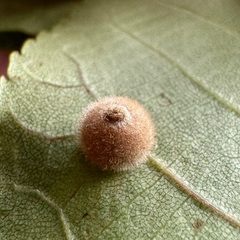
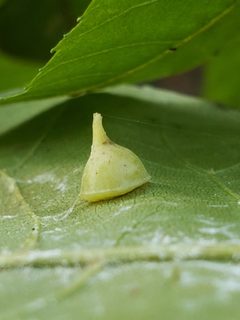
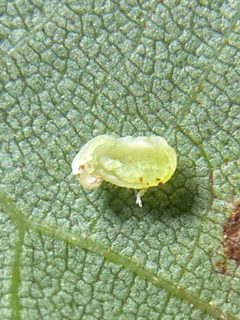
Pronunciation
How to pronounce Caryomyia: //ˌkæɹioʊˈmaɪə//
These audio files are automatically generated. While they are not always 100% accurate, they are a good starting point.
Identification
Identification to level generally requires examination of the induced gall structure on plants, as is often subtle and similar among related species. Gall location (leaf, petiole, stem, bud), shape, size, and texture are primary diagnostic features. Molecular methods may be necessary for definitive identification of some species.
Images
Appearance
are small, delicate flies typical of gall midges, with long, slender and reduced wing venation. Larvae are maggot-like, legless, and develop within plant galls. Specific morphological details vary among and are primarily documented through gall characteristics rather than adult .
Habitat
Associated with deciduous forests and woodlands where hickory trees (Carya ) occur. Presence is determined by plant availability rather than specific structure.
Distribution
Recorded from the United States, including Vermont. Distribution corresponds to the range of hickory in North America.
Diet
Larvae feed on plant tissue within induced galls on hickory . Specific feeding mechanisms and nutritional relationships with tissue are not well documented.
Host Associations
- Carya - plantVarious of hickory serve as for gall induction
Life Cycle
Larvae develop within galls on hickory plants. occurs within or near the gall. are short-lived and do not feed. Specific details of voltinism and stages vary among and are not comprehensively documented for the .
Ecological Role
As gall inducers, these function as specialized herbivores that manipulate plant growth. Galls may provide microhabitats for other organisms (, ), though specific associations are not well documented for most .
Human Relevance
Occasional minor pests in hickory orchards or timber stands when gall densities are high, though generally of limited economic significance. Galls may cause cosmetic damage or minor growth reduction but rarely threaten tree survival.
Similar Taxa
- AsphondyliaOther gall midge in Cecidomyiidae that induce galls on woody plants; distinguished by association and gall
- DasineuraRelated gall midge with similar ; separation requires detailed morphological examination of or gall characteristics
More Details
Taxonomic history
Described by Felt in 1909, with subsequently added as new gall morphologies were discovered on hickory .