
Caryomyia hirtiglobus
Gagné, 2008
Hickory Woody Globe Gall Midge
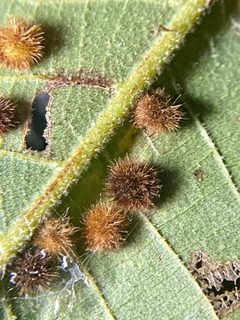
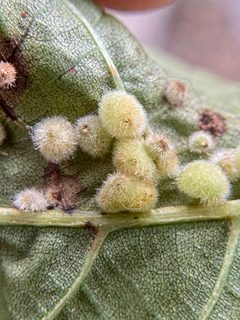
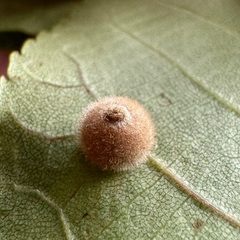
Caryomyia hirtiglobus is a gall midge in the Cecidomyiidae, described by Gagné in 2008. The induces woody, spherical galls on hickory trees (Carya spp.). It is one of several Caryomyia species associated with hickory, with its specific epithet 'hirtiglobus' referring to the hairy, globe-shaped galls it produces. The species has been documented in eastern North America where its hickories occur.
Pronunciation
How to pronounce Caryomyia hirtiglobus: /ˌkærioʊˈmaɪə ˌhɪrtɪˈɡloʊbəs/
These audio files are automatically generated. While they are not always 100% accurate, they are a good starting point.
Identification
The galls of C. hirtiglobus are distinguished from other hickory galls by their woody, globose (spherical) form with a hairy or pubescent surface. The specific epithet 'hirtiglobus' (hairy globe) directly describes this . Galls are typically found on leaf petioles or midribs. are small, delicate flies with reduced wing venation typical of Cecidomyiidae; specific diagnostic features for this require examination of genitalia.
Images
Habitat
Deciduous forests and woodlands where hickory trees (Carya spp.) occur, particularly in areas with Carya tomentosa (mockernut hickory) and related .
Distribution
Eastern North America, corresponding to the range of its hickory . Documented observations span from the northeastern United States through the Midwest and southeastern states.
Seasonality
and gall formation occur during the growing season when hickory leaves are expanding; specific data are limited but likely follows the pattern of other spring-emerging gall midges.
Diet
Larval stage feeds on plant tissue within the gall; the exact nutritional relationship (whether truly parasitic or inducing nutritive tissue) has not been specifically documented for this .
Host Associations
- Carya - gall inducer ; specific associations not definitively documented but likely includes Carya tomentosa and other hickories
Life Cycle
Like other Cecidomyiidae, C. hirtiglobus undergoes complete with , larva, pupa, and stages. Larvae develop within the woody gall, pupating inside or emerging to pupate in soil. Specific details of voltinism and stage are not documented.
Behavior
Induces gall formation on hickory tissues; the gall provides protected and nutrition for larval development.
Ecological Role
As a gall inducer, creates microhabitats that may be used by and ; contributes to hickory herbivore diversity.
Human Relevance
Of minor economic significance; galls may cause aesthetic damage to ornamental hickories but do not typically threaten tree health. The is of interest to students of gall-forming insects and forest .
Similar Taxa
- Caryomyia caryaecolaAlso forms galls on hickory; distinguished by gall —C. caryaecola produces smooth, non-hairy galls rather than the pubescent globes of C. hirtiglobus
- Caryomyia tubicolaAnother hickory gall midge; produces tubular or spindle-shaped galls on leaf rather than spherical galls
- Caryomyia sanguinolentaForms red, fleshy galls on hickory leaflets; distinct color and texture differentiate from woody, hairy galls of C. hirtiglobus