
Caryomyia caryaecola
(Osten Sacken, 1862)
Hickory Onion Gall Midge
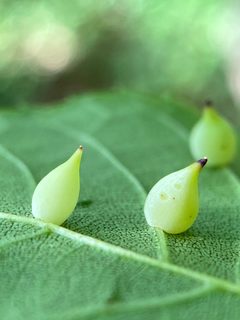
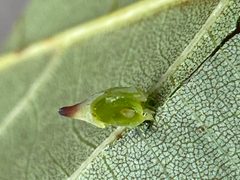
Caryomyia caryaecola, commonly known as the hickory onion , is a gall-inducing fly in the Cecidomyiidae. The is specialized on hickory trees (Carya species), forming distinctive galls on foliage. As a member of the Caryomyia, it belongs to a radiation of gall midges associated with hickory and pecan.

Pronunciation
How to pronounce Caryomyia caryaecola: //ˌkɛəriˈoʊmiə ˌkɛər.jiˈɛkoʊlə//
These audio files are automatically generated. While they are not always 100% accurate, they are a good starting point.
Identification
The is recognized by its association with the characteristic "onion gall" structure on hickory leaves—rounded, often clustered galls that resemble small onions. are minute flies with reduced wing venation typical of Cecidomyiidae. Specific morphological features distinguishing C. caryaecola from require examination of adult genitalia or larval .
Images
Habitat
Deciduous forests and woodlands where hickory trees (Carya ) occur. The species is tied to the presence of its plants rather than specific abiotic conditions.
Distribution
Eastern North America, corresponding to the native range of hickory in the Carya.
Diet
Larvae feed on plant tissue within galls induced on hickory leaves. The exact nutritional relationship—whether the feeds on plant tissue directly, on gall tissue, or on associated fungal or microbial growth within the gall—has not been definitively established.
Host Associations
- Carya - gall inductionForms galls on hickory foliage; specific Carya not definitively documented in available sources
Ecological Role
As a gall inducer, the modifies plant tissue to create a protected microhabitat for larval development. Galls may influence leaf and plant resource allocation, though specific impacts on hickory are not well documented.
Similar Taxa
- Caryomyia tubicolaAlso induces galls on hickory; distinguished by gall (tubular vs. onion-shaped) and morphological features
- Other Caryomyia speciesMultiple occur on Carya; precise identification requires detailed examination of or larvae