
Caryomyia glauciglobus
Gagné, 2008
Hickory Blue-powder Gall Midge
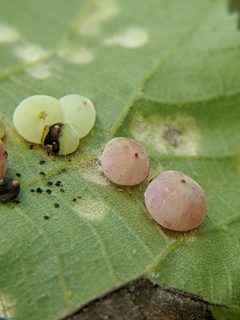
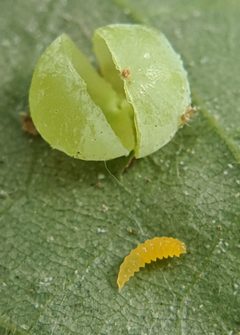
Caryomyia glauciglobus is a of gall midge in the Cecidomyiidae, described by Gagné in 2008. It is known for inducing distinctive blue-powder galls on hickory trees (Carya species). The species is part of the Caryomyia, which comprises gall midges specialized on Carya .
Pronunciation
How to pronounce Caryomyia glauciglobus: /ˌkæriːoʊˈmaɪə ˌɡlɔːsɪˈɡloʊbəs/
These audio files are automatically generated. While they are not always 100% accurate, they are a good starting point.
Identification
This can be distinguished from other Caryomyia species by the characteristic blue-powder appearance of its galls on hickory leaves and stems. The specific epithet "glauciglobus" refers to the glaucous (bluish-gray or powdery) and globular nature of these galls. are small, delicate flies typical of the , with reduced wing venation and long, bead-like .
Images
Habitat
Associated with deciduous forests and woodlands where hickory trees (Carya ) occur. The presence of suitable trees is the primary requirement.
Distribution
Eastern North America, where hickory are native. Specific range details are limited due to the species' relatively recent description.
Host Associations
- Carya - gall inductionInduces galls on hickory
Ecological Role
As a gall inducer, this manipulates plant tissue to form protective structures for larval development. The galls represent a form of plant-animal interaction that may affect leaf function and tree physiology, though specific ecological impacts have not been quantified.
Human Relevance
The galls produced by this are visually distinctive and may be noticed by observers of hickory trees. The species has been documented through citizen science platforms, contributing to understanding of its distribution. No significant economic impact on hickory timber or nut production has been reported.
Similar Taxa
- Caryomyia caryaecolaAlso induces galls on hickory, but produces different gall morphologies (notably the blue-powder characteristic of C. glauciglobus)
- Caryomyia tubicolaAnother hickory-associated gall midge in the same with distinct gall structures