
Ommatius
Wiedemann, 1821
Plumetops
Species Guides
9- Ommatius baboquivari
- Ommatius bromleyi
- Ommatius floridensis
- Ommatius gemma
- Ommatius ouachitensis(robber fly)
- Ommatius parvulus
- Ommatius pretiosus
- Ommatius tibialis(Northeastern Plumetop)
- Ommatius wilcoxi(robber fly)
Ommatius is a large and morphologically diverse of robber flies (Diptera: Asilidae) within the Asilinae. The genus contains numerous distributed across multiple biogeographic regions, with particularly well-documented diversity in the Afrotropical region and the Americas. Species are organized into multiple species groups based on morphological characteristics. Like other Asilidae, members of this genus are predatory as both larvae and . The genus has been subject to extensive taxonomic revision due to its high and complex morphological variation.
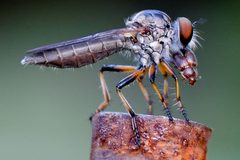
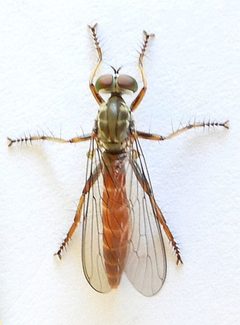
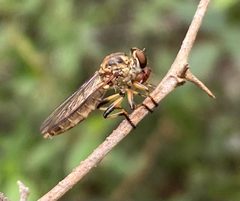
Pronunciation
How to pronounce Ommatius: //ɒˈmæti.əs//
These audio files are automatically generated. While they are not always 100% accurate, they are a good starting point.
Identification
Identification to level requires examination of male terminalia and other detailed morphological features; external alone is often insufficient. Species are grouped into morphological complexes (e.g., holosericeus complex, costatus group, ampliatus group) based on shared characteristics of genitalia and body structure. The mystax (facial hair) pattern, leg spination, and wing venation provide useful characters for distinguishing species groups.
Images
Distribution
Afrotropical region; Brazil and other parts of South America; Peru (Cuzco, Ayacucho, Pasco, Cajamarca departments); United States (Vermont, other records). Distribution extends across tropical and temperate regions globally, though precise range boundaries for most remain incompletely documented.
Ecological Role
Predatory on other insects as both larvae and ; contributes to control of insect prey .
Similar Taxa
- Other Asilidae generaOmmatius can be distinguished from other robber fly by specific combinations of morphological characters, particularly details of the male terminalia and body proportions; however, precise differentiation often requires taxonomic knowledge.
Sources and further reading
- BugGuide
- Wikipedia
- GBIF taxonomy match
- iNaturalist taxon
- NCBI Taxonomy
- Catalogue of Life
- Something Wonderful Is Happening Saturday, Jan. 18 at Bohart Museum of Entomology | Bug Squad
- Why You Should Celebrate World Robber Fly Day | Bug Squad
- Times Flies When You're Studying Flies! Bohart Museum Open House Jan. 12 | Bug Squad
- O Grupo costatus de Ommatius Wiedemann (Diptera, Asilidae) no Brasil: Novos Registros e Distribuição de Ommatius costatus Rondani e Ommatius orenoquensis Bigot
- Revision of Ommatius Wiedemann (Diptera: Asilidae). IV. Pygommatius subgen. nov. with twenty-five Afrotropical species
- The ampliatus species group of Ommatius Wiedemann, 1821 (Diptera, Asilidae, Ommatiinae) in Peru with the description of four new species