
Ommatius tibialis
Say, 1823
Northeastern Plumetop
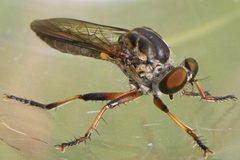
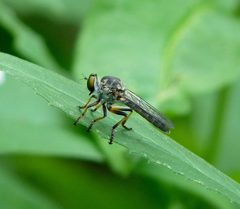
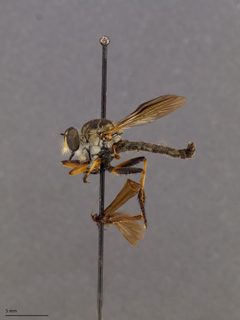
Ommatius tibialis is a of robber fly in the Asilidae, commonly known as the Northeastern Plumetop. The species was described by Thomas Say in 1823. As a member of the Asilidae, it is a predatory fly with venomous mouthparts used to subdue prey. The Ommatius is one of the largest genera within the family, with species distributed across multiple continents.
Pronunciation
How to pronounce Ommatius tibialis: /ɔˈmeɪʃəs taɪˈbiːəlɪs/
These audio files are automatically generated. While they are not always 100% accurate, they are a good starting point.
Identification
The specific epithet 'tibialis' suggests a distinguishing feature related to the tibiae (lower leg segments). In the Ommatius, are often distinguished by leg coloration, mystax (facial hair) patterns, and wing venation. Ommatius tibialis may be distinguished from similar by characteristics of the tibiae, though specific diagnostic features require examination of or original description.
Images
Distribution
Vermont, United States; broader distribution within the United States. The epithet and 'Northeastern Plumetop' suggest affinity for the northeastern region of North America.
Ecological Role
Similar Taxa
- Ommatius amula in the same , sharing general body plan and predatory ; distinguished by specific morphological features of legs and coloration patterns
- Other Ommatius speciesThe contains numerous that require careful examination of tibial characteristics, mystax patterns, and male genitalia for accurate identification
More Details
Sources and further reading
- BugGuide
- Wikipedia
- GBIF taxonomy match
- iNaturalist taxon
- NCBI Taxonomy
- Catalogue of Life
- Something Wonderful Is Happening Saturday, Jan. 18 at Bohart Museum of Entomology | Bug Squad
- Why You Should Celebrate World Robber Fly Day | Bug Squad
- Times Flies When You're Studying Flies! Bohart Museum Open House Jan. 12 | Bug Squad
- Bembicid Holdings | Entomology Research Museum
- Meloidae Holdings | Entomology Research Museum
- And Then There Were Three: New Termite Species Identified in California