
Megaphorus clausicellus
(Macquart, 1850)
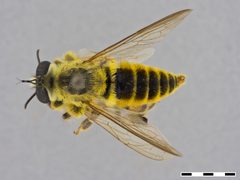
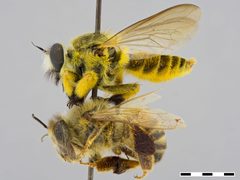
Megaphorus clausicellus is a of robber fly ( Asilidae) originally described by Macquart in 1850 under the name Mallophora clausicella. Robber flies in this are predatory and typically associated with open, dry . The species has been documented in the western United States, with observations from Nevada and other Great Basin localities. Like other members of the genus Megaphorus, are presumed to be aerial of other insects.
Pronunciation
How to pronounce Megaphorus clausicellus: //ˌmɛɡəˈfɔːrəs ˌklaʊsɪˈsɛləs//
These audio files are automatically generated. While they are not always 100% accurate, they are a good starting point.
Identification
Megaphorus are large, robust robber flies with a distinctive mystax (beard of bristles) on the . M. clausicellus can be distinguished from related species by genitalic characters and details of wing venation, though specific diagnostic features for this species require examination of type material. The Megaphorus is characterized by large body size, strong legs adapted for capturing prey in , and a typically tapered . Species-level identification within Megaphorus is challenging and often requires examination.
Images
Habitat
Open sandy areas. Based on collection records and related , this species occurs in arid and semi-arid environments including sage grasslands, scrublands, and open areas with rabbitbrush (Chrysothamnus/Ericameria) and other woody composites.
Distribution
Western United States, including Nevada. Documented from Lyon County, Nevada near Wellington Springs. The Megaphorus occurs broadly across western North America, and this appears to be restricted to the Great Basin and adjacent regions.
Seasonality
have been observed in late August. Activity likely coincides with late summer and early fall, similar to related robber fly in the region.
Diet
are predatory on other insects, presumably including bees, , and other flying insects common in their . Larval diet unknown but likely predatory or parasitic on other insects in soil or decaying wood.
Host Associations
- Chrysothamnus viscidiflorus - perching site observed torpidly clinging to stem of yellow rabbitbrush
Behavior
have been observed perching on vegetation, likely in ambush for prey. One observation describes an individual as 'torpidly clinging' to a plant stem, suggesting or early morning inactivity periods. Like other robber flies, adults are presumed to be active aerial hunters during warmer periods of the day.
Ecological Role
Apex aerial in its . Robber flies play important roles in regulating of other insects, including and potential pest .
Similar Taxa
- Microstylum morosumLarger congeneric in same ; distinguished by size, distribution, and wing coloration
- Efferia spp.Similar large robber fly with overlapping distribution; distinguished by genitalic characters and facial bristle arrangement
More Details
Taxonomic history
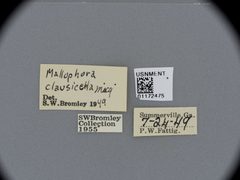
Originally described as Mallophora clausicella by Macquart in 1850, later transferred to Megaphorus. The genus Megaphorus was historically confused with Mallophora and related large robber fly genera.