
Megaphorus
Bigot, 1857
Species Guides
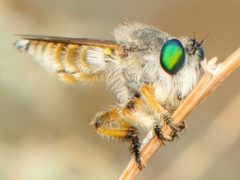
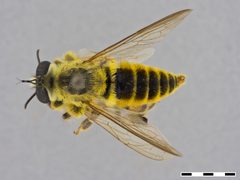
9Megaphorus is a of robber flies ( Asilidae) containing approximately 18 described . These predatory dipterans are found in western North America, particularly in arid and semi-arid regions. are typically observed perching on vegetation, where they ambush flying insect prey. The genus was established by Bigot in 1857 and is classified within the tribe Apocleini of the Asilinae.

Pronunciation
How to pronounce Megaphorus: /ˌmɛɡəˈfɔrəs/
These audio files are automatically generated. While they are not always 100% accurate, they are a good starting point.
Images
Habitat
Arid and semi-arid environments including sage grasslands, desert scrub, and pinyon-juniper woodlands. Associated with stands of rabbitbrush (Ericameria and Chrysothamnus ) and other woody composites. One observation records an individual torpidly clinging to yellow rabbitbrush (Chrysothamnus viscidiflorus) stems.
Distribution
Western North America, with records from Nevada, Utah, Arizona, and adjacent regions. Specific localities include Lyon County and Wellington Springs in Nevada.
Seasonality
have been observed in late August, suggesting late summer to early fall activity. This timing coincides with the blooming period of rabbitbrush plants.
Host Associations
- Chrysothamnus viscidiflorus - perching siteyellow rabbitbrush; observed as substrate for resting
- Ericameria nauseosa - perching sitegray rabbitbrush; associated with where occur
Behavior
are sit-and-wait that perch on vegetation to ambush flying insect prey. One individual was observed in a torpid state, clinging to a plant stem. Like other robber flies, they are presumed to be active hunters with excellent vision.
Ecological Role
Predatory insects that help regulate of other flying insects. As members of the Asilidae , they occupy a mid-to-upper in terrestrial .
Similar Taxa
- EfferiaBoth belong to the Efferia group of robber flies and share similar robust, hairy body plans. Efferia is more diverse and widespread; Megaphorus has been historically confused with or considered related to Efferia, with some taxonomic treatments placing in one or the other genus.
- TriorlaAlso part of the Efferia group; Triorla resemble Megaphorus in general habitus and were historically segregated from Efferia. Both share the characteristic of males lacking distinctly swollen genital capsules.
- MicrostylumAnother large, robust robber fly with similar overall appearance, though Microstylum are distinguished by a mystax confined to the oral margin and composed of stout bristles.
More Details
Taxonomic Uncertainty
The Megaphorus has been subject to taxonomic revision and debate. Some authorities have treated it as a synonym or subgenus of Efferia, while others maintain it as distinct. The most recent treatments recognize Megaphorus as a valid genus within the tribe Apocleini. Field identifications to genus level are often tentative and require expert confirmation.
Observation Challenges
Megaphorus are rarely encountered in large numbers. Available observations suggest they are less frequently seen than related such as Efferia, possibly due to lower abundance, more restricted preferences, or cryptic . Most records come from incidental observations during general insect collecting rather than targeted surveys.