
Megaphorus acrus
(Curran, 1931)
Hairy Robber Fly
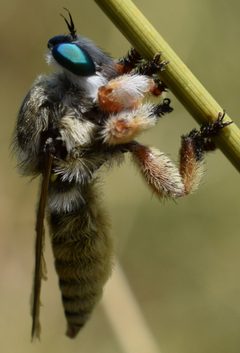
Megaphorus acrus is a of robber fly in the Asilidae, first described by Curran in 1931. It belongs to a characterized by large, hairy-bodied predatory flies. The species is part of the diverse Asilidae family, whose members are known for their aggressive hunting and distinctive physical appearance. Like other robber flies, M. acrus is presumed to be an aerial of other insects.
Pronunciation
How to pronounce Megaphorus acrus: /ˌmɛɡəˈfɔrəs ˈeɪkrəs/
These audio files are automatically generated. While they are not always 100% accurate, they are a good starting point.
Identification
Megaphorus are generally recognized by their large size, densely hairy bodies, and predatory habits. Within the , species-level identification typically requires examination of genitalia and other subtle morphological characters. M. acrus may be distinguished from by characters described in Curran's 1931 original description, though these are not readily accessible in the provided sources.
Images
Habitat
Specific preferences for M. acrus are not documented. Members of Megaphorus are generally found in open, arid to semi-arid landscapes including grasslands, scrublands, and desert-edge habitats where they perch on vegetation to hunt.
Distribution
Precise geographic range is not well established in available sources. The Megaphorus is primarily distributed in western and southwestern North America, with some extending into Mexico. Based on collection records from related sources, M. acrus likely occurs in the Great Basin and adjacent regions of the western United States.
Seasonality
activity period is not specifically documented for this . Most Megaphorus species are active during warmer months, typically late spring through early fall.
Behavior
Presumed to exhibit typical robber fly predatory : perching on vegetation to spot flying prey, then launching rapid aerial attacks using spiny legs to capture other insects. The name 'Megaphorus' (meaning 'large thief') reflects this lifestyle.
Ecological Role
Human Relevance
No direct human relevance documented. Like most robber flies, not known to bite humans unless handled, and holds no agricultural or medical significance.
Similar Taxa
- Microstylum morosumAnother very large North American robber fly that approaches or exceeds Megaphorus in size; distinguished by different mystax structure and wing coloration
- Efferia speciesLarge, hairy robber flies in the same tribe (Apocleini) with similar predatory habits; distinguished by male genitalia structure and facial characteristics
- Other Megaphorus speciesCongeneric share the large, hairy appearance; species-level distinctions require careful examination of morphological details, particularly male terminalia
More Details
Taxonomic Note
The Megaphorus was established by Curran in 1931 with M. acrus as the type . The genus has undergone various taxonomic treatments, with some authors considering it closely related to or synonymous with Efferia, though current classifications maintain it as distinct.
Nomenclature
The specific epithet 'acrus' is derived from Greek, meaning 'highest' or 'topmost', possibly referring to the large size of this relative to other robber flies known at the time of description.