Doru aculeatum
(Scudder, 1876)
spine-tailed earwig
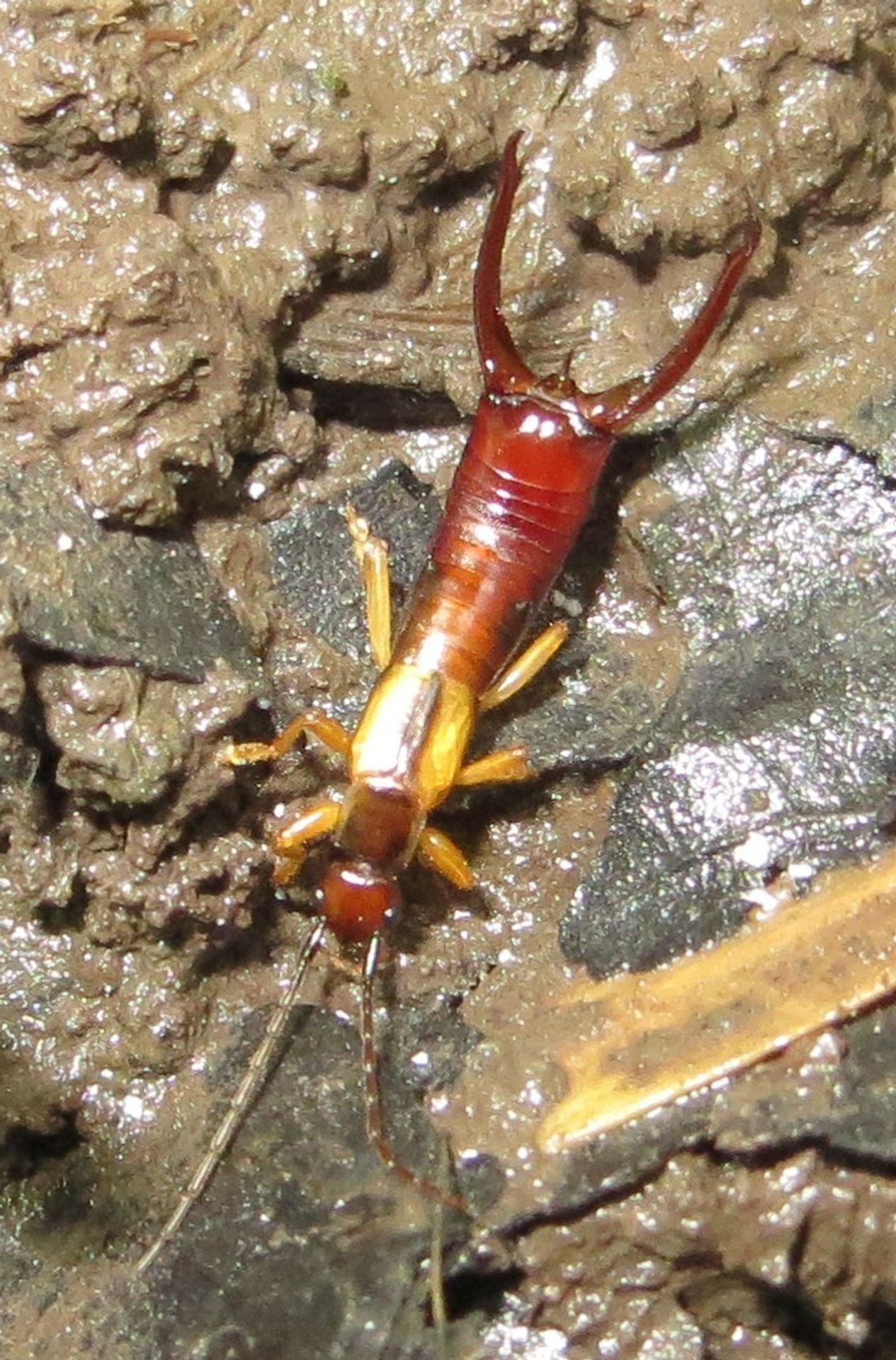
Doru aculeatum, commonly known as the spine-tailed , is a native North American in the Forficulidae. It is the only native earwig species in the northern United States, ranging into southern Canada. The species is notable for the male's distinctive short thornlike spine between the , a feature absent in other regional earwigs. It occurs in wooded and grassy and is frequently attracted to outdoor lights at night.
Pronunciation
How to pronounce Doru aculeatum: //ˈdɔːɹu əˌkjuːliˈeɪtəm//
These audio files are automatically generated. While they are not always 100% accurate, they are a good starting point.
Identification
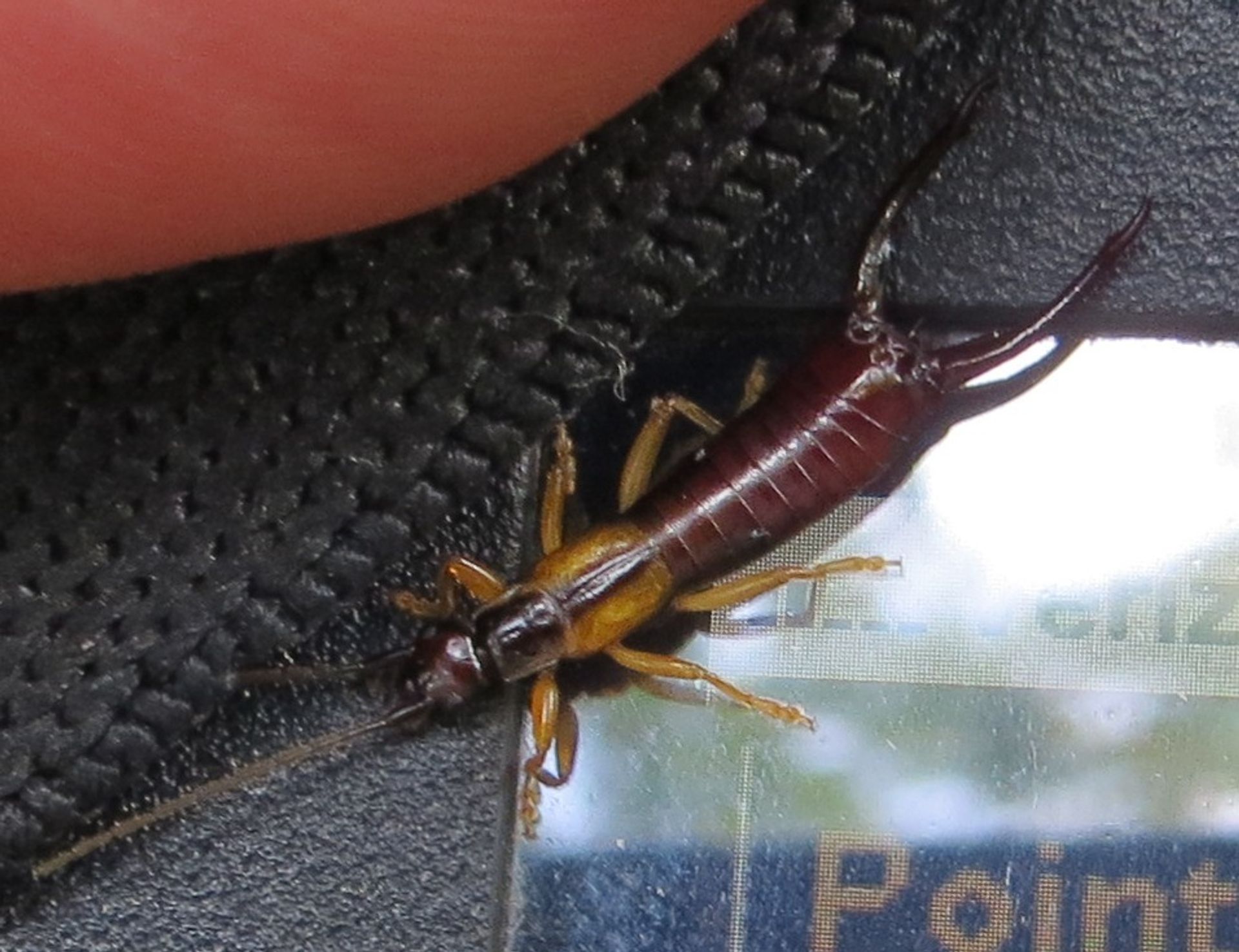
The male's short thornlike spine between the on the 10th abdominal segment is diagnostic and unique among North American . The combination of dark chestnut brown coloration with yellow markings on palpi, legs, pronotal edges, and tegmina distinguishes it from other regional . It is the only native earwig species in the northern United States and Canada, which aids in identification at higher latitudes. Male forceps are slender, curved, with a pointed tooth at the second bend; female forceps are shorter, straighter, with contiguous crenulate inner edges.
Images
Appearance
are dark chestnut brown with yellow palpi, legs, edges of the pronotum, and outer two-thirds of the tegmina. The pronotum is longer than broad and narrower than the . Tegmina are nearly twice as long as the pronotum and ; inner wings are usually aborted. Males have forceps three-fourths as long as the , slender, curved, bent downward at the basal third, becoming horizontal before the tip, with a pointed tooth at the second bend. Female forceps are shorter than those of males, nearly straight, with finely crenulate lower inner edges that are usually contiguous for most of their length and incurved tips. A short thornlike spine is present between the on the 10th abdominal segment in males only. Body length: males 8–11 mm, females 7.5–10 mm; tegmina length 2.5–3 mm; male forceps 4.7–6 mm, female forceps 3–3.5 mm; male pygidial spine 0.8–1 mm.
Habitat
Found in woods and grassy areas. In southern Ontario wetlands, hide in the leaf axils of emerging plants.
Distribution
Eastern North America. The only native in the northern United States, occurring as far north as southern Canada (Ontario).
Behavior
are attracted to outdoor lights at night. In southern Ontario wetlands, adults hide in the leaf axils of emerging plants.
Similar Taxa
- Forficula auriculariaIntroduced European earwig; lacks the male's diagnostic pygidial spine and has different forceps and coloration.
- Euborellia spp.Other in North America lack the distinctive male pygidial spine and differ in forceps structure.
More Details
Taxonomic significance
Doru aculeatum is the only native in the northern United States, making it of biogeographic interest.
Historical description
The was described in W.S. Blatchley's 'Orthoptera of Northeastern America' (1920), which provides detailed morphological measurements still referenced today.