
Doru
Burr, 1907
Species Guides
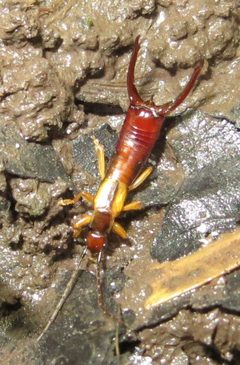
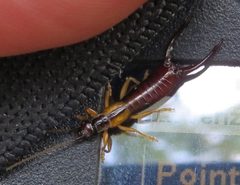
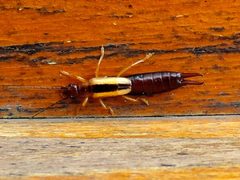
2- Doru aculeatum(spine-tailed earwig)
- Doru taeniatum(lined earwig)
Doru is a of earwigs in the Forficulidae, established by Burr in 1907. It belongs to the Forficulinae and is part of the diverse group of Eudermaptera within the order Dermaptera. The genus has been documented through over 4,900 observations on iNaturalist, indicating it is relatively well-observed in nature. Doru are found within the broader distribution of Forficulidae, which has a distribution with particular diversity in temperate and tropical regions.
Pronunciation
How to pronounce Doru: /ˈdoʊruː/
These audio files are automatically generated. While they are not always 100% accurate, they are a good starting point.
Identification
Doru can be distinguished from other Forficulidae by characteristics of the forceps () structure and genitalia, though specific diagnostic features require examination of and detailed morphological study. Within Forficulinae, Doru is separated from related genera such as Forficula by subtle differences in cercal and body proportions. Accurate identification to level within Doru generally requires microscopic examination of male genitalia.
Images
Distribution
The Doru has been recorded across multiple continents based on iNaturalist observations, with presence documented in North America, Central America, and parts of South America. The distribution appears to overlap with the broader range of Forficulidae, which is .
Similar Taxa
- ForficulaBoth belong to Forficulinae and share general body plan with prominent forceps; Doru is distinguished by differences in cercal and male genitalia structure
- EuborelliaAnother forficulid with overlapping distribution; Doru differs in forceps shape and abdominal tergite characteristics
More Details
Taxonomic History
The Doru was established by Malcolm Burr in 1907, a prominent British entomologist who made extensive contributions to Dermaptera . The genus has remained in Forficulidae, though the higher classification of Dermaptera has undergone significant revision in recent decades.
Observation Data
As of the data source date, Doru has accumulated 4,922 observations on iNaturalist, suggesting it is among the more frequently encountered in regions where citizen scientists are active, particularly in the Americas.