
Penthe
Newman, 1838
velvety bark beetles
Species Guides
2- Penthe obliquata(Oblique Polypore Fungus Beetle)
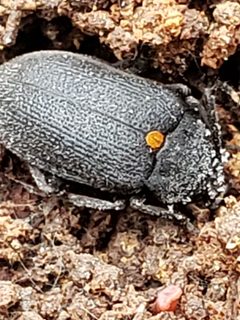
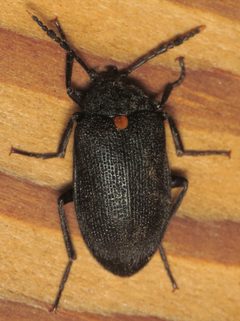
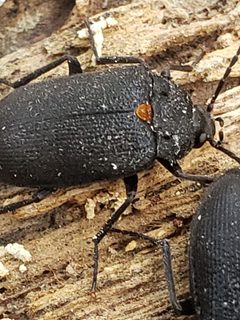
- Penthe pimelia(Velvety bark beetle)
Penthe is a of polypore fungus beetles in the Tetratomidae, comprising at least nine described . The genus is the type genus of the Penthinae. and larvae are saproxylic, feeding on fungi associated with decaying wood. The genus has a complex taxonomic history, having been placed in Tenebrionidae, Melandryidae, and finally Tetratomidae based on larval and adult morphological characters.
Pronunciation
How to pronounce Penthe: //ˈpɛn.θi//
These audio files are automatically generated. While they are not always 100% accurate, they are a good starting point.
Images
Habitat
Found under bark and on rotting wood in woody areas. frequently occur on the surface of polypore fungi at night. Larvae develop internally within fungal fruiting bodies, feeding on hyphal tissue.
Distribution
Holarctic and Oriental regions, including China, the Himalayas, Japan, and North America. Specific collection records include the Dayaoshan Mountains in Guangxi, China.
Diet
and larvae feed on various fungi associated with rotting wood, specifically Polyporaceae (including Polyporus, Piptoporus, Fomitopsis) and Tricholomataceae. Larvae feed internally on hyphal tissue.
Host Associations
- Polyporus - fungal food sourcePolypore fungus on rotting wood
- Piptoporus - fungal food sourcePolypore fungus on rotting wood
- Fomitopsis - fungal food sourcePolypore fungus on rotting wood
- Polyporaceae - fungal found on surface at night; larvae feed internally on hyphal tissue
- Tricholomataceae - fungal found on surface at night; larvae feed internally on hyphal tissue
Behavior
are , frequently found on the surface of fungal fruiting bodies at night.
Ecological Role
Saproxylic decomposer; contributes to nutrient cycling in decaying wood through .
More Details
Taxonomic History
Penthe has had unsettled placement. Early authors placed it in Tenebrionidae (1838–1853), followed by placement in Melandryidae under various tribal arrangements (1883–1924). Based on larval and characters, it was definitively placed in Tetratomidae by Crowson (1955), Lawrence (1982), and Nikitsky (1998).
Species Diversity
At least nine described are recognized, including P. almorensis, P. brevicollis, P. japana, P. javana, P. obliquata, P. pimelia (the velvety bark ), P. reitteri, P. rufopubens, and P. similis. The species P. kochi has been sequenced for complete mitochondrial analysis.
Mitochondrial Genome
The complete mitochondrial of P. kochi is 16,719 with 37 typical mitochondrial genes (13 protein-coding genes, 2 rRNAs, 22 tRNAs, and an A+T-rich region). Gene arrangement matches the ancestral insect pattern. The genome shows high A/T (80.60%). This represents the first complete mitogenome for Tetratomidae.
Sources and further reading
- BugGuide
- Wikipedia
- GBIF taxonomy match
- iNaturalist taxon
- NCBI Taxonomy
- Catalogue of Life
- Proposed conservation of the name Penthe Newman, 1838 (Coleoptera: Tetratomidae: Penthinae) threatened by the discovery of an older available name
- The Complete Mitochondrial Genomes of Penthe kochi (Coleoptera: Tetratomidae) with Its Phylogenetic Implications.