
Penthe obliquata
(Fabricius, 1801)
Oblique Polypore Fungus Beetle
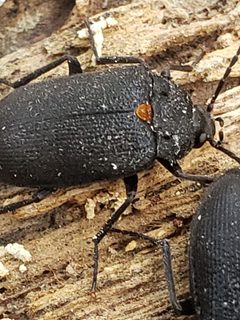
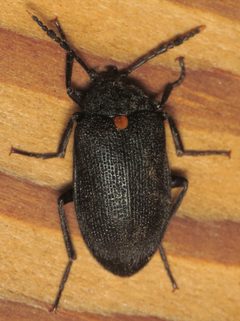
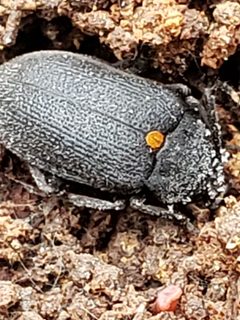
Penthe obliquata is a polypore fungus beetle in the Tetratomidae, distinguished by its dark body and bright orange scutellum. It ranges from 11–14 mm in length and is found across eastern and midwestern North America. The inhabits forested environments where it associates with decaying wood and polypore fungi.
Pronunciation
How to pronounce Penthe obliquata: //ˈpɛn.θi əˌblɪˈkwɑː.tə//
These audio files are automatically generated. While they are not always 100% accurate, they are a good starting point.
Identification
The bright orange scutellum is the key diagnostic feature separating Penthe obliquata from the only other North American in the , Penthe pimelia. The combination of dark body coloration and orange scutellum is distinctive within Tetratomidae in its range.
Images
Habitat
Found under loose bark of decaying and decomposing trees and in dry fungi. Inhabits mature hardwood forests, floodplain forests, swamps, pine forests, and other forested .
Distribution
Eastern and midwestern regions of the United States and Canada. Documented from Manitoba, New Brunswick, and Nova Scotia in Canada.
Diet
Associated with fleshy and woody polypore fungi; known include Polyporus versicolor, Polyporus varius, and Fomitopsis pinicola.
Host Associations
- Polyporus versicolor - fungal
- Polyporus varius - fungal
- Fomitopsis pinicola - fungal
Ecological Role
Decomposer associated with decaying wood and polypore fungi in forest .
Similar Taxa
- Penthe pimeliaOnly other North American in ; distinguished by lacking the bright orange scutellum characteristic of P. obliquata
More Details
Conservation Status
levels are thought to be secure, though large portions of the range lack NatureServe status ranks.