
Helops
Fabricius, 1775
Species Guides
26Helops is a of darkling beetles in the Tenebrionidae, Tenebrioninae. The genus was established by Fabricius in 1775 and contains both extant and extinct distributed across Europe. Species within Helops exhibit morphological diversity, with some displaying resembling those of ground beetles rather than typical darkling beetles.
Pronunciation
How to pronounce Helops: //ˈhɛ.ləps//
These audio files are automatically generated. While they are not always 100% accurate, they are a good starting point.
Identification
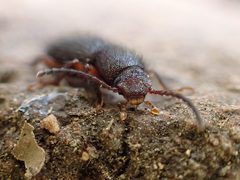
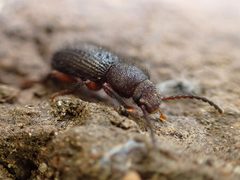
Helops can be distinguished from other darkling beetles by a combination of characters: with segments longer than wide (filament-like rather than bead-like), resembling ground beetle antennae; concealed beneath the rather than exposed; and relatively slow movement compared to ground beetles. These features create potential confusion with Carabidae, requiring careful examination of mouthpart concealment to confirm placement in Tenebrionidae.
Images
Distribution
Europe. Specific distribution varies by ; Helops coeruleus has a broad European range, while other species have more restricted distributions.
Similar Taxa
- EleodesBoth are darkling beetles (Tenebrionidae) that may exhibit -standing defensive , but Eleodes has bead-like segments typical of the , while Helops has filament-like antennae resembling ground beetles.
- Carabidae (ground beetles)Helops possess with longer-than-wide segments similar to ground beetles, but differ in having concealed (vs. exposed) and slower movement (vs. rapid running).
More Details
Species diversity
The includes both extant and extinct . Extinct species (marked †) include Helops atticus, Helops meissneri, Helops molassicus, and Helops wetteravicus, known from fossil records.
Taxonomic history
Helops pernitens has been specifically noted in identification literature as an example of a darkling beetle with ground beetle-like , highlighting the morphological diversity within the .