
Helopini
Latreille, 1802
darkling beetles
Genus Guides
5Helopini is a tribe of darkling beetles within the Tenebrionidae, containing at least 50 . Members are distributed across diverse from lowlands to high-altitude areas, including cold environments. Several have been documented feeding on lichens, with some showing specialized associations with particular lichen families. The tribe includes both native and introduced species, with some demonstrating cold- mechanisms including antifreeze proteins.
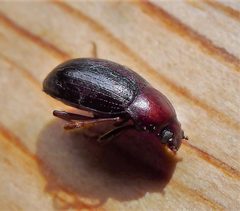
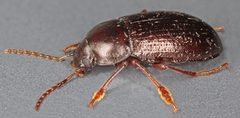

Pronunciation
How to pronounce Helopini: //hɛˈlɒpɪni//
These audio files are automatically generated. While they are not always 100% accurate, they are a good starting point.
Images
Habitat
Members occupy diverse environments including forested low mountains, high mountain alpine zones, steppe , and cold dune areas. Some inhabit microhabitats under stones near snow or buried in cold substrates during winter and early spring. The tribe spans elevations from lowlands to high-altitude areas.
Distribution
Widespread across the Palearctic region, with documented occurrence in Turkey, the Caucasus (Georgia, Armenia, Azerbaijan), Iran, Turkmenistan, Syria, the Balkans (Albania), Europe, Israel, Egypt, and Cyprus. North American representatives occur in the subtribe Cylindrinotina. Some show disjunctive distributions.
Seasonality
of several are active during cold periods of the year, including winter and early spring. Activity patterns appear correlated with cold-adapted physiology.
Diet
beetles feed primarily on lichens. Documented lichen include Physciaceae, Parmeliaceae, and Cladoniaceae. Feeding on crustose lichens (Pertusaria sp.) has been observed. One introduced feeds specifically on of the Desmococcus.
Host Associations
- Physciaceae - food sourceprimary lichen for multiple
- Parmeliaceae - food sourceprimary lichen for multiple
- Cladoniaceae - food source lichen for some
- Pertusaria - food sourcecrustose lichen; first recorded crustose lichen feeding in Coleoptera
- Desmococcus - food sourcealgal ; sole food source for introduced Odocnemis aurichalcea in North Caucasus
Behavior
activity has been documented in some . show specific responses to temperature and humidity conditions. Some species occupy narrow under natural conditions.
Ecological Role
Lichen-feeding members contribute to nutrient cycling in lichen-dominated . Some form distinct taxocenes in tenebrionid .
Human Relevance
Some have been introduced to new regions through anthropogenic activity, including urban greening. One species (Helops caeruleus caeruleus) has been recorded in Cyprus likely due to anthropogenic introduction.
Similar Taxa
- Other Tenebrionidae tribesHelopini distinguished by combination of morphological characters including antennal structure, protarsal structure, and male genitalia features; molecular evidence supports monophyly based on antifreeze protein sequences
- Cylindrinotina (subtribe)North American subtribe formerly treated within Helopini or as separate lineage; taxonomic placement revised based on phylogenetic analysis
Sources and further reading
- BugGuide
- Wikipedia
- iNaturalist taxon
- Catalogue of Life
- Taxonomic position of Odocnemis steindachneri in the tribe Helopini (Coleoptera: Tenebrionidae)
- Contributions to the knowledge of North American tenebrionids of the subtribe Cylindrinotina (Coleoptera: Tenebrionidae: Helopini)
- Identification of Conserved Repetitive Amino Acid Motifs in Antifreeze Proteins of Selected Helopini Species (Coleoptera: Tenebrionidae)
- A taxonomic review of the genus Euboeus Boieldieu, 1865 (Coleoptera: Tenebrionidae: Helopini) of the Caucasus, Iran and Turkmenistan
- Revision of the genus Odocnemis Allard, 1876 (Coleoptera: Tenebrionidae: Helopini) from Turkey, the Caucasus and Iran with observations on feeding habits
- Two new species and new records of darkling beetles of the tribe Helopini from Turkey and Cyprus (Coleoptera: Tenebrionidae)
- Taxonomic notes on the Eocene Helopini, and a review of the genus Isomira Mulsant, 1856 from Baltic amber (Coleoptera: Tenebrionidae)
- Two new species and new records of lichen-feeding darkling beetles (Coleoptera: Tenebrionidae: Helopini) from Turkey with notes on bionomics and trophic relations
- A new subgenus and species of the genus <i>Hedyphanes</i> Fischer von Waldheim, 1820 (Coleoptera: Tenebrionidae: Helopini) from Israel and Egypt
- DISJUNCTIVE DISTRIBUTION OF ODOCNEMIS PROTINUS (REITTER, 1900), THE FIRST REPRESENTATIVE OF THE GENUS (COLEOPTERA: TENEBRIONIDAE: HELOPINI) IN IRAN
- Naturalisation of the Transcaucasian and East Anatolian darkling beetle Odocnemis aurichalcea (Adams, 1817) (Coleoptera: Tenebrionidae: Helopini) in the North Caucasus