
Nalassus
Mulsant, 1854
Species Guides
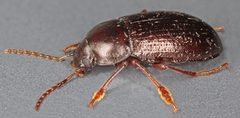
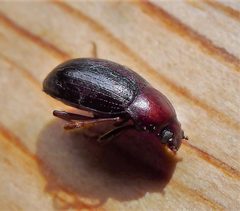
3A of darkling beetles (Tenebrionidae) comprising more than 70 distributed across the Palearctic and North America. Species occupy diverse from coniferous forests to alpine zones and steppe landscapes. The genus exhibits pronounced ecological specialization, with distinct species groups adapted to forest, alpine, or steppe environments and corresponding trophic .

Pronunciation
How to pronounce Nalassus: //nəˈlæsəs//
These audio files are automatically generated. While they are not always 100% accurate, they are a good starting point.
Identification
identification requires examination of male genitalia ( structure), structure, (especially in males), pronotum shape, scutellar shield , and elytral interstriae pattern. occurs in antennae structure. Subgeneric classification (including Nalassus s. str., Caucasonotus, Helopocerodes) reflects long isolation in arid and mountainous landscapes.
Images
Habitat
Forest occur in coniferous forests with corticolous substrates. Alpine species inhabit high-elevation zones with saxicolous (rock-dwelling) lichen . Steppe species occupy limestone mountain phryganoid steppes and open landscapes with terricolous lichen substrates. Species show biotopical preferences for woodland or mesophytic landscapes, avoiding very wet conditions.
Distribution
Palearctic distribution with notable disjunction: Western Palearctic (Mediterranean, Europe including British Isles, Anatolia, Caucasus, Iran), Central Asian centre of diversity (South-Eastern Kazakhstan, Tarbagatai ridge), and Eastern Palearctic (Western China/Xinjiang, Eastern China/Beijing). Western and Eastern Palearctic separated by vast desert landscapes of Middle and Central Asia. Nearctic records present.
Seasonality
activity occurs across temperature ranges from −4°C to +40°C and humidity from 0–100%, with activity patterns observed. activity includes feeding and copulation.
Diet
Lichenophagy is the predominant feeding strategy. Forest feed mainly on corticolous foliose lichens ( Physciaceae). Alpine species consume saxicolous foliose lichens (family Parmeliaceae). Steppe species feed on terricolous foliose lichens (family Cladoniaceae). and saprophagy have been documented in some species occupying open landscapes. Algophagy occurs in two species.
Behavior
activity with direct feeding observed at night. Trophic specialization serves as the primary strategy for reducing competition among cohabiting . Occupation of open landscapes correlates with dietary shifts from lichenophagy toward and saprophagy.
Ecological Role
Primary consumer of foliose lichens in respective . Trophic specialization allows coexistence of multiple through partitioning.
Sources and further reading
- BugGuide
- Wikipedia
- GBIF taxonomy match
- iNaturalist taxon
- NCBI Taxonomy
- Contribution to the knowledge of genus Nalassus Mulsant, 1856 (Coleoptera: Tenebrionidae) from the Eastern Caucasus, Russia
- A review of the genus Nalassus Mulsant, 1854 (Coleoptera: Tenebrionidae: Helopini) of China with new concept of the distribution of the genus
- A new Nalassus Mulsant, 1854 (Coleoptera: Tenebrionidae) from Transcaucasia with a key to species from the Greater Caucasus and notes on the taxonomy, distribution, bionomics and trophic relations
- Trophic relations and ecological niches of darkling beetles of the genus <i>Nalassus</i> Mulsant, 1854 (Coleoptera: Tenebrionidae) in the Caucasus and description of a new species from Abkhazia