
Helops confluens
(Casey, 1924)
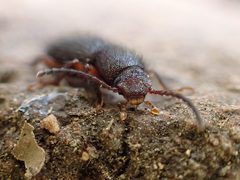
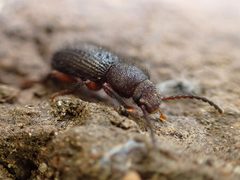
Helops confluens is a of darkling beetle in the Tenebrionidae, described by Casey in 1924. As a member of the Helops, it belongs to a group of beetles commonly found in arid and semi-arid across North America. The genus Helops is part of the diverse darkling beetle family, which contains over 20,000 described species worldwide. Information specific to H. confluens appears limited in the available literature.
Pronunciation
How to pronounce Helops confluens: /ˈhɛlɒps kənˈfluːɛnz/
These audio files are automatically generated. While they are not always 100% accurate, they are a good starting point.
Identification
Members of the Helops can be distinguished from similar darkling beetles by their generally elongate body form and with bead-like segments. However, specific diagnostic features for H. confluens are not documented in the provided sources. The name 'confluens' (meaning 'flowing together') may refer to markings or coloration patterns, but this is speculative without direct examination of type material.
Images
Similar Taxa
- Helops pernitensAnother in the same , mentioned in identification literature as having resembling ground beetles but with concealed jaws typical of darkling beetles. Both species share the genus-level characteristics of Helops.
- Eleodes spp.Common darkling beetles in the same (Tenebrionidae) that share the concealed and slow, lumbering movement. Eleodes are famous for their -standing defensive , which distinguishes them from Helops.
- Ground beetles (Carabidae)Superficially similar in general body form but distinguished by exposed forward-directed , longer antennal segments, and rapid running movement. The source material specifically contrasts these two for identification purposes.
More Details
Taxonomic Note
The Helops has undergone taxonomic revisions, and some have been moved to other genera. The exact current circumscription of Helops and placement of H. confluens within the genus would require examination of modern taxonomic treatments.
Data Deficiency
This appears to be poorly represented in online databases and general entomological literature. The GBIF match confirms its accepted status but provides no additional biological information. Original description in Casey's 1924 work would be the primary source for morphological details.