
Coniontis
Eschscholtz, 1829
Species Guides
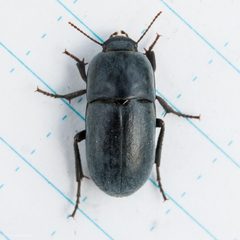
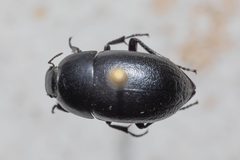
2Coniontis is a of darkling beetles ( Tenebrionidae) in the tribe Coniontini. The genus was established by Eschscholtz in 1829 and contains multiple distributed primarily in western North America. These beetles are generally associated with arid and semi-arid . The genus is well-represented in entomological collections and citizen science observations.
Pronunciation
How to pronounce Coniontis: //koʊˈniːˌɒntɪs//
These audio files are automatically generated. While they are not always 100% accurate, they are a good starting point.
Identification
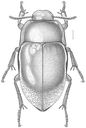
Coniontis are distinguished from other Pimeliinae by their compact, often oval body shape and the structure of their , which are typically (bead-like) or slightly clubbed. Members of this often have a dull, matte with fine punctation. Separation from related genera such as Eleodes or Asbolus requires examination of tarsal structure, antennal segment proportions, and male genitalia.
Images
Habitat
in this inhabit arid and semi-arid regions, including deserts, scrublands, and dry grasslands. They are typically found in sandy or rocky substrates and are often associated with vegetation such as shrubs and cacti that provide shelter and food resources.
Distribution
Western North America, with records from the southwestern United States and northwestern Mexico. The shows highest diversity in the Mojave and Sonoran Desert regions.
Seasonality
are most commonly observed during spring and early summer, with activity patterns influenced by rainfall and temperature. Some may be active during cooler periods in winter.
Behavior
Coniontis are primarily and often found under rocks, debris, or vegetation during daylight hours. When disturbed, some individuals may exhibit (death-feigning ), though this is less pronounced than in the related Eleodes.
Ecological Role
As , Coniontis contribute to decomposition of plant material in arid . They serve as prey for various vertebrate and including birds, lizards, and rodents.
Human Relevance
Coniontis has no direct economic importance. The is of interest to entomologists studying desert beetle diversity and to citizen scientists, as evidenced by over 4,000 observations on iNaturalist.
Similar Taxa
- EleodesBoth belong to Pimeliinae and share a general darkling beetle form, but Eleodes are generally larger, more elongate, and possess well-developed defensive glands that produce a characteristic odor—features absent or reduced in Coniontis.
- AsbolusAsbolus overlap in range and with Coniontis, but are distinguished by their highly tuberculate or sculptured and different antennal proportions.
More Details
Taxonomic Notes
The Coniontis is the type genus of the tribe Coniontini. -level within the genus has been historically challenging due to morphological similarity and . Modern revisions using molecular data are ongoing.