
Diaperinae
Latreille, 1802
Tribe Guides
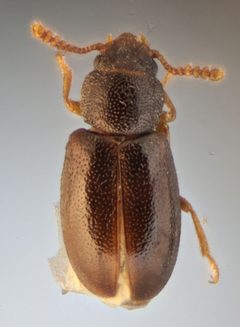
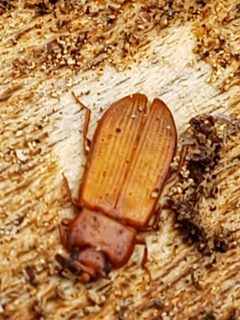
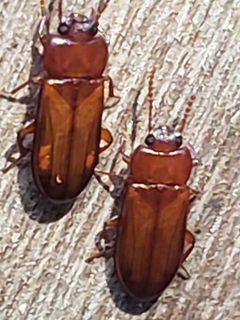
8Diaperinae is a of darkling beetles (Tenebrionidae) comprising more than 120 organized into 11 tribes. The subfamily exhibits considerable ecological diversity, including fungivorous that inhabit fruiting bodies of bracket fungi, myrmecophilous species that live commensally within nests, and free-living forms. Some species display specialized adaptations such as reduced for subterranean life, compact rounded body shapes for physical defense against ants, and cuticular hydrocarbon mimicry of ant recognition signals.
Pronunciation
How to pronounce Diaperinae: //ˌdaɪˈæpəˌraɪniː//
These audio files are automatically generated. While they are not always 100% accurate, they are a good starting point.
Identification
Diaperinae is distinguished from other Tenebrionidae by tribal-level characters; members of tribe Diaperini often exhibit 5-5-4 tarsal segmentation. Within the subfamily, myrmecophilous such as Oochrotus and Myrmechixenus display reduced , depigmented , and compact rounded body forms. Fungivorous genera including Ischnodactylus and Platydema are associated with specific fungal . Detailed identification requires reference to tribal and generic keys.
Images
Habitat
Highly variable across tribes and : fungivorous inhabit fruiting bodies of wood-decaying fungi on deciduous trees; myrmecophilous species occupy deep subterranean chambers in nests, particularly in xeric Mediterranean localities with sandy soils; free-living species occur in diverse terrestrial environments.
Distribution
distribution with strong representation in the Palearctic, Afrotropical, and Oriental regions. The African Stomylus is restricted to sub-Saharan Africa (excluding Madagascar). The myrmecophilous genus Oochrotus is strictly Mediterranean, ranging from Morocco and Algeria through southern Europe to Turkey, Cyprus, and Syria. Asian genera such as Ischnodactylus and Platydema occur in East Asia including Korea.
Diet
Ecologically diverse: on bracket fungi (Trametes orientalis, Stereum hirsutum, S. ostrea) in Ischnodactylus and Platydema; consumption of seed debris and organic remains in nest waste dumps in myrmecophilous genera such as Oochrotus; specific dietary habits for most genera remain undocumented.
Host Associations
- Messor barbarus - primary for Oochrotus unicolorseed-harvesting ; lives deep in nests
- Messor capitatus - for Oochrotus unicolorseed-harvesting
- Messor sanctus - for Oochrotus unicolornot present in France
- Trametes orientalis - fungal fruiting body inhabited by Ischnodactylus parallelicornis; monophagous association
- Stereum hirsutum - fungal fruiting body inhabited by Platydema higonium
- Stereum ostrea - fungal fruiting body inhabited by Platydema higonium
Life Cycle
Poorly documented at level. In myrmecophilous such as Oochrotus unicolor, the is completed entirely within nests, with beetles remaining in deep subterranean chambers (>1.5 m) and rarely appearing on the surface. Developmental stages for most unknown.
Behavior
Myrmecophilous exhibit commensal within nests, acting as nest cleaners. Defensive behaviors include lowering the compact rounded body to the substrate, retracting short legs, and folding to prevent grasping by ants. Chemical mimicry via cuticular hydrocarbons matching host ant recognition signals has been documented. Some species are hypogenous, emerging only after heavy rains or under specific microclimatic conditions.
Ecological Role
Nest cleaners in colonies, consuming organic debris and seed remains in waste dumps; this activity may limit development in nests. Fungivorous contribute to nutrient cycling in forest through association with wood-decaying fungi.
Similar Taxa
- Tenebrioninaelargest of Tenebrionidae; distinguished from Diaperinae by different tribal composition and typically 5-5-4 or other tarsal formulas; lacks the specialized myrmecophilous and fungivorous radiations characteristic of Diaperinae
- Pimeliinaeoften arid-adapted darkling beetles; distinguished by different body form and lack of documented associations; Pimeliinae includes many psammophilous and not known from Diaperinae
More Details
Taxonomic scope
The contains at least 120 in 11 tribes, though -level diversity remains poorly inventoried. The tribe Diaperini includes genera with diverse ecological specializations.
Research gaps
Ecological and data are available for only a small fraction of ; most tribes lack any published biological information beyond and distribution.
Sources and further reading
- BugGuide
- Wikipedia
- iNaturalist taxon
- NCBI Taxonomy
- Catalogue of Life
- The species of the African genus Stomylus Fåhraeus (Coleoptera: Tenebrionidae: Diaperinae)
- Oochrotus unicolor Lucas, 1852, in France: updated distribution, faunistics and ecology (Coleoptera, Tenebrionidae, Diaperinae)
- Taxonomy and distribution of the species of the genus Myrmechixenus Chevrolat, 1835 (Tenebrionidae: Diaperinae)1
- First record of two fungivorous tenebrionids, Ischnodactylus parallelicornis (Nakane) and Platydema higonium Lewis (Coleoptera: Tenebrionidae: Diaperinae) from Korea with new fungal hosts