
Platydema
Laporte & Brullé, 1831
Species Guides
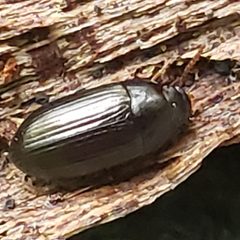
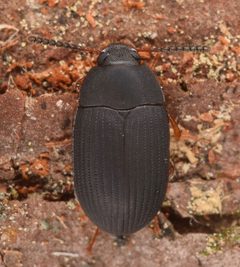
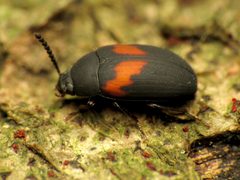
19Platydema is a of darkling beetles ( Tenebrionidae, Diaperinae) comprising at least 60 described . Multiple species have been documented as obligately associated with fungal fruiting bodies, with some exhibiting monophagy on specific bracket fungi. The genus has a broad geographic distribution including Asia, Europe, and North America.
Pronunciation
How to pronounce Platydema: /ˌplætɪˈdiːmə/
These audio files are automatically generated. While they are not always 100% accurate, they are a good starting point.
Identification
Members of Platydema can be distinguished from other Diaperinae by the combination of: elongate-elliptical body form; with 11 segments and a weakly to moderately clubbed apex; pronotum with distinct lateral margins; and typically or punctate-striate. Specific identification to level requires examination of male genitalia and detailed comparison of antennal club structure, pronotal shape, and elytral patterns.
Images
Habitat
Deciduous forest , specifically in association with fungal fruiting bodies on dead or decaying wood. have been recorded from bracket fungi (Polyporaceae, Stereaceae) growing on standing or fallen hardwood trees.
Distribution
Recorded from Korea, Japan, Europe (Denmark, Norway, Sweden), Colombia, and the United States (Vermont). The appears to have a Holarctic distribution with some tropical records.
Diet
Fungivorous. Multiple are obligately associated with fungal fruiting bodies; Platydema higonium has been observed feeding exclusively on Stereum hirsutum and Stereum ostrea.
Host Associations
- Stereum hirsutum - food sourceexclusive for Platydema higonium in Korea
- Stereum ostrea - food sourceexclusive for Platydema higonium in Korea
- Trametes orientalis for related Ischnodactylus parallelicornis; not confirmed for Platydema
Life Cycle
Complete (, larva, pupa, ). Larval development occurs within fungal fruiting bodies. Specific duration and voltinism unknown for most .
Behavior
and larvae inhabit fungal fruiting bodies throughout their lives. Some exhibit monophagy, remaining associated with a single fungal species.
Ecological Role
Fungivore; contributes to decomposition of fungal fruiting bodies and nutrient cycling in forest .
Similar Taxa
- IschnodactylusBoth belong to tribe Diaperini and share fungivorous habits and association with bracket fungi on deciduous trees. Ischnodactylus can be distinguished by differences in antennal structure and male genitalia .
More Details
Taxonomic history
The was established by Laporte & Brullé in 1831. It is currently classified in the tribe Diaperini, Diaperinae. At least 67 have been described, though species-level requires revision.
Research gaps
Most lack published data. associations are documented for only a few Asian species; the majority of species have unknown ecological requirements.
Sources and further reading
- BugGuide
- Wikipedia
- GBIF taxonomy match
- iNaturalist taxon
- NCBI Taxonomy
- Catalogue of Life
- NOTES ON PLATYDEMA ELLIPTICUM FAB., AND ITS FUNGUS HOST
- Biology of Platydema nigroaeneum Motschulsky (Coleoptera: Tenebrionidae) from Korea: Life History and Fungal Hosts
- First record of two fungivorous tenebrionids, Ischnodactylus parallelicornis (Nakane) and Platydema higonium Lewis (Coleoptera: Tenebrionidae: Diaperinae) from Korea with new fungal hosts