
Ischnomera
Stephens, 1832
false blister beetles
Species Guides
5- Ischnomera discolor
- Ischnomera excavata
- Ischnomera nigra
- Ischnomera puncticollis(Spot-necked Oedemerid)
- Ischnomera ruficollis(Red-necked False Blister Beetle)
Ischnomera is a of false blister beetles ( Oedemeridae) containing over 40 described . These beetles are typically found on flowers, where they feed on pollen. The genus is characterized by relatively soft-bodied and is part of the tribe Asclerini within the Oedemerinae.
Pronunciation
How to pronounce Ischnomera: /ɪsˈknoʊˌmɪərə/
These audio files are automatically generated. While they are not always 100% accurate, they are a good starting point.
Identification
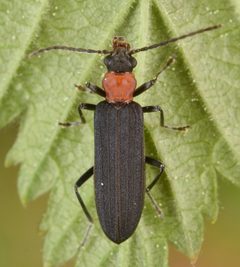
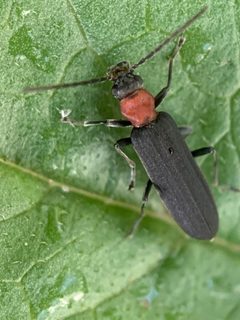
Ischnomera can be distinguished from other Oedemeridae by their elongated, somewhat parallel-sided body form and relatively soft, flexible . often exhibit contrasting color patterns, such as the reddish-orange pronotum with black elytra seen in I. ruficollis. Males have slightly expanded hind tibiae, a trait common to many Oedemerinae.
Images
Habitat
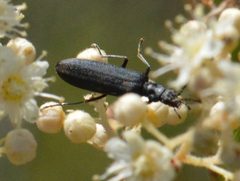
Found in open woodlands, forest edges, and prairies. are frequently observed on flowers of woody shrubs and trees, particularly Prunus and Amelanchier .
Distribution
Records from Europe (Denmark, Norway, Sweden) and North America (United States, including Vermont and Missouri).
Seasonality
are active in spring, with observations in April documented in Missouri.
Diet
feed on pollen of flowering plants. Specific plants include Prunus mexicana (Mexican plum) and Amelanchier arborea (downy serviceberry). Larval diet is unknown but presumed to involve decaying wood or plant material based on -level traits.
Host Associations
- Prunus mexicana - pollen source observed feeding on flowers
- Amelanchier arborea - pollen source observed feeding on flowers
Behavior
are and frequently found mating on flowers. They are active fliers and readily move between flowering plants.
Ecological Role
function as pollen feeders and likely contribute to pollination of early spring-blooming woody plants. Their role as larvae remains undocumented.
Similar Taxa
- Oedemerasimilar soft-bodied form and flower-visiting ; Oedemera males have more dramatically swollen hind tibiae
- Nacerdesalso in Oedemeridae but with different body proportions and typically associated with coastal or riparian