Ischnomera nigra
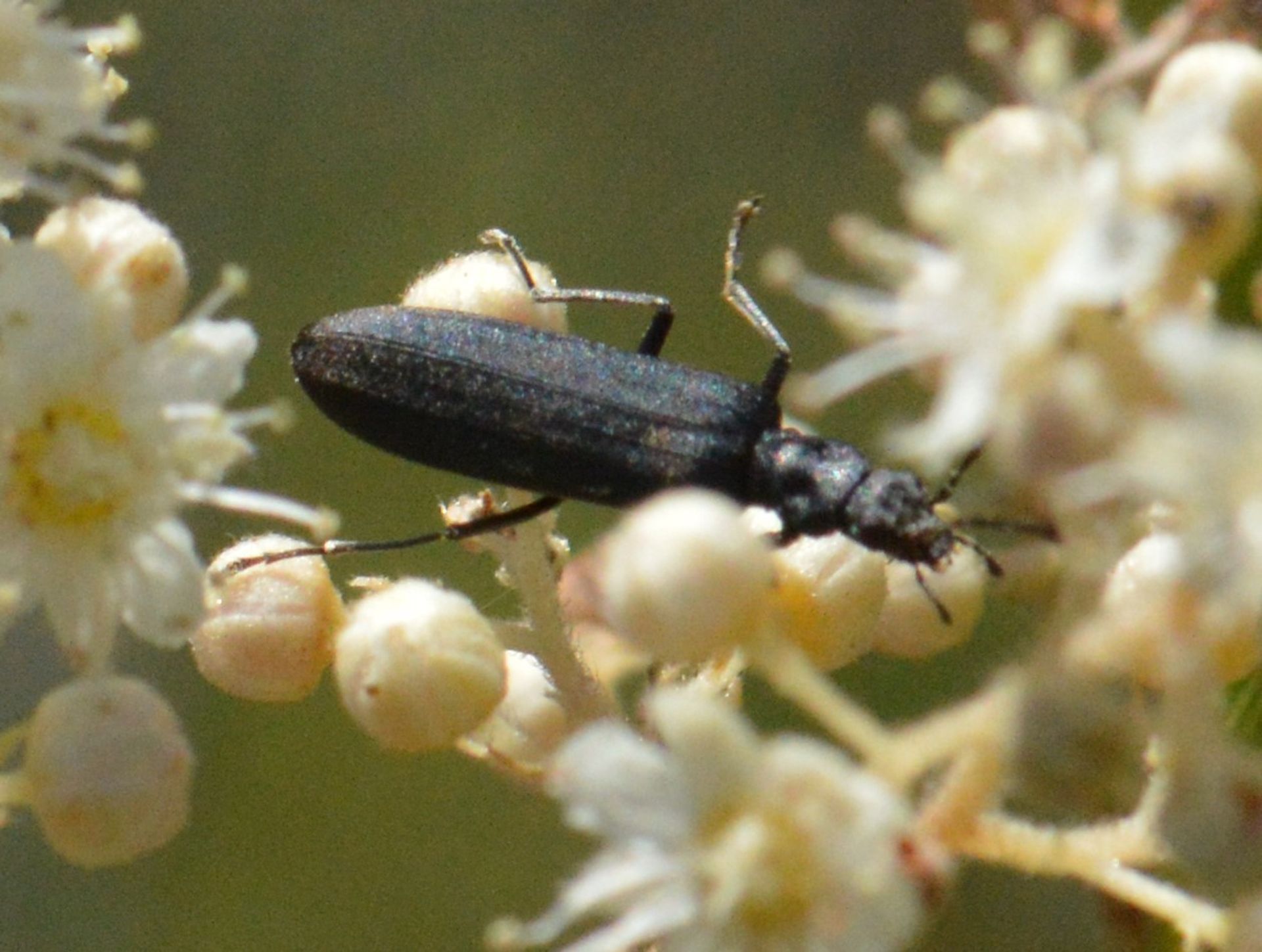
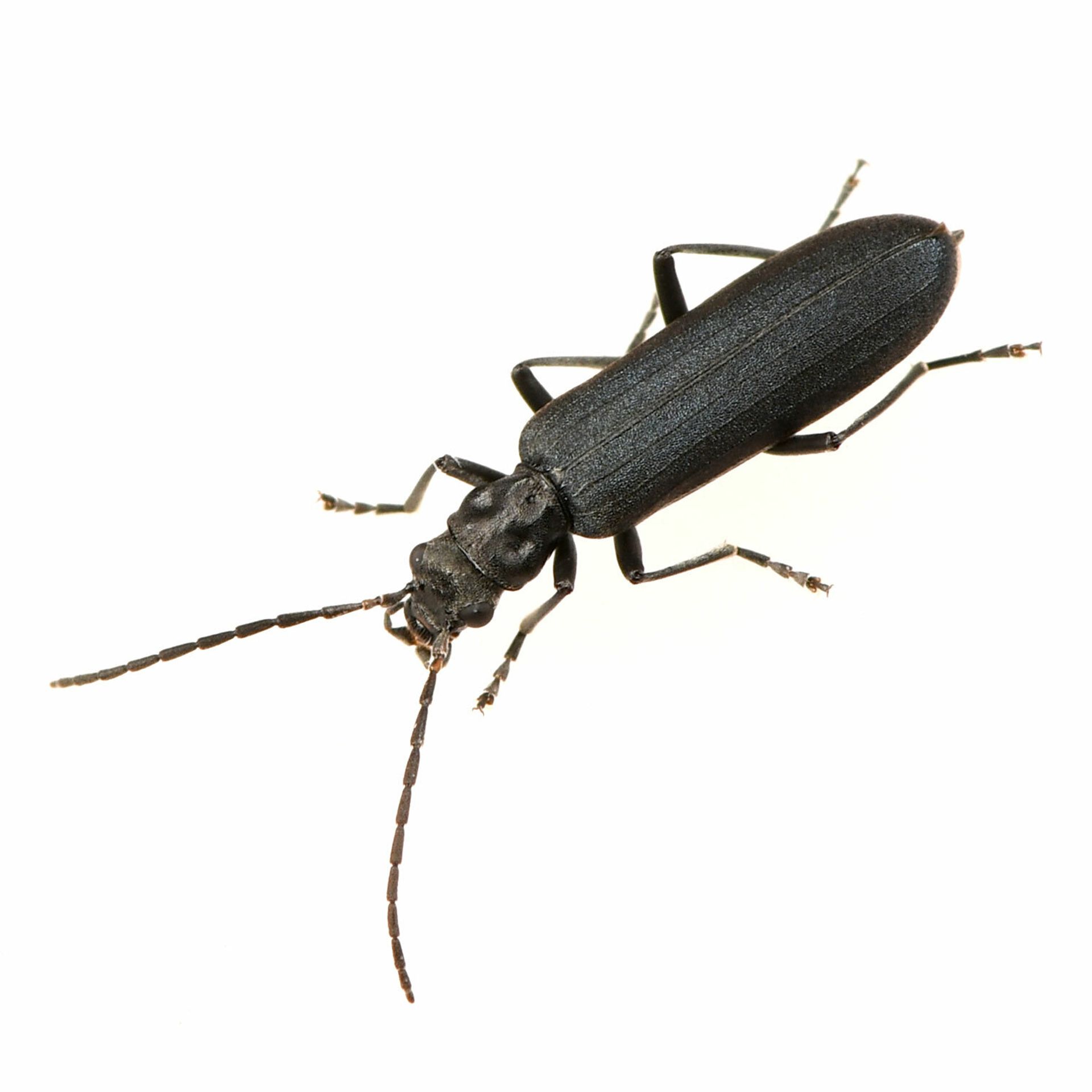
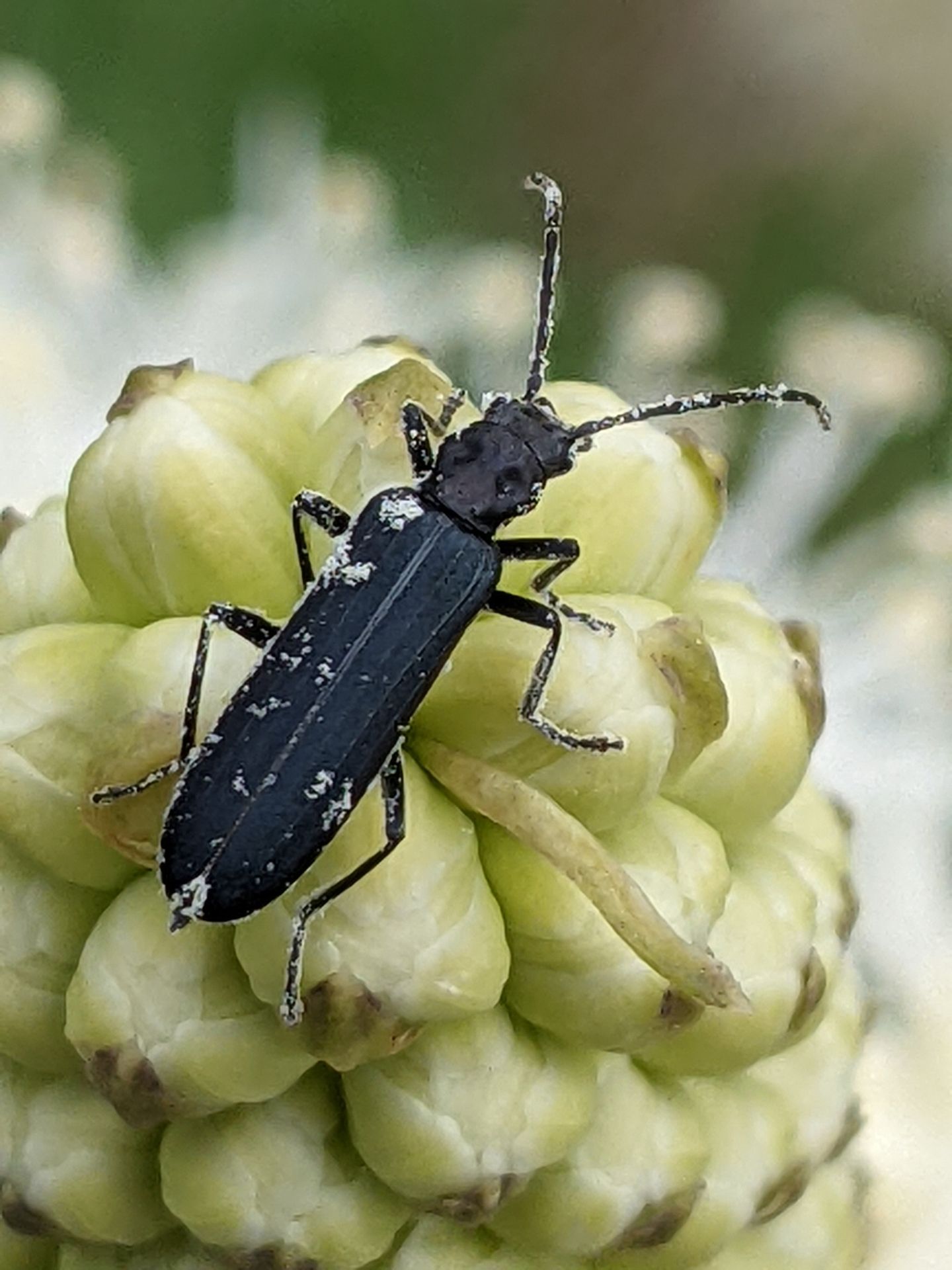
Ischnomera nigra is a of false blister beetle in the Oedemeridae. Members of this are characterized by their elongated bodies and soft typical of the family. The species name 'nigra' refers to its black coloration. As with other Oedemeridae, are frequently found on flowers where they feed on pollen. The genus Ischnomera is distinguished from related genera by antennal and leg characteristics.
Pronunciation
How to pronounce Ischnomera nigra: /ˌɪsknoʊˈmɪərə ˈnaɪɡrə/
These audio files are automatically generated. While they are not always 100% accurate, they are a good starting point.
Identification
Ischnomera nigra is distinguished from by its entirely black coloration, in contrast to Ischnomera ruficollis which has a reddish-orange pronotum and often reddish legs. The Ischnomera is separated from the similar Nacerdes by the form of the antennal insertions and the structure of the hind legs. have soft, flexible that do not fully cover the tip, a -wide trait of Oedemeridae.
Images
Distribution
The has been documented in North America based on iNaturalist observations. Specific range details beyond these occurrence records are not well established in the available literature.
Behavior
have been observed on flowers of Prunus mexicana (Mexican plum) and Amelanchier arborea (downy serviceberry), where they occur alongside other flower-visiting beetles such as Orsodacne atra and Ischnomera ruficollis. Mating pairs have been documented on these floral .
Similar Taxa
- Ischnomera ruficollisDistinguished by reddish-orange pronotum and often reddish legs versus entirely black coloration in I. nigra; both occur sympatrically on flowers of Prunus and Amelanchier.
- Nacerdes melanuraAlso in Oedemeridae with soft , but differs in antennal insertion structure and hind leg ; Nacerdes typically associated with decaying wood and coastal rather than flowers.