
Pyrota mylabrina
Chevrolat, 1834
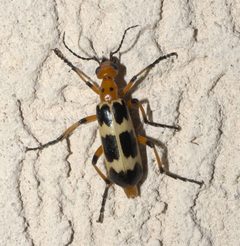
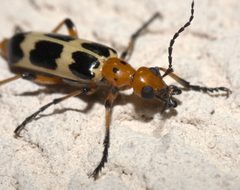
Pyrota mylabrina is a blister beetle in the Meloidae, distributed across Central America and North America. The was described by Chevrolat in 1834. Like other members of the Pyrota, it is characterized by aposematic coloration, typically featuring orange or yellow and black patterns that serve as warning signals for its chemical defenses. The genus is known for pronounced sexual size dimorphism in some species, with males often considerably smaller than females.
Pronunciation
How to pronounce Pyrota mylabrina: //paɪˈroʊtə ˌmaɪləˈbraɪnə//
These audio files are automatically generated. While they are not always 100% accurate, they are a good starting point.
Identification
Pyrota mylabrina can be distinguished from other Pyrota by specific elytral and pronotal color patterns. The Pyrota is characterized by soft, flexible typical of Meloidae, thread-like , and generally orange or yellow ground color with black markings. Species-level identification requires examination of the precise configuration of black stripes or spots on the elytra and pronotum. P. mylabrina is similar to P. bilineata, which has two black pronotal spots and black and white longitudinal elytral stripes, but differs in specific pattern elements. Definitive identification should be confirmed by comparison with or keys.
Images
Distribution
Central America and North America. Specific country records are not documented in available sources.
Similar Taxa
- Pyrota bilineataSimilar orange and black aposematic coloration with longitudinal elytral stripes, but differs in specific pattern details of pronotal spots and elytral banding.
- Pyrota palpalisShares the -level characteristics of soft and warning coloration, but has distinctively different pattern elements on the pronotum and elytra.
More Details
Taxonomic History
The was described by Chevrolat in 1834. The Pyrota is placed in the tribe Pyrotini within the Meloinae. The name 'mylabrina' appears to be derived from the related blister beetle genus Mylabris, suggesting a perceived similarity in appearance or .