
Pyrota palpalis
Champion, 1891
Charlie Brown blister beetle
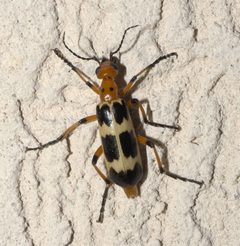
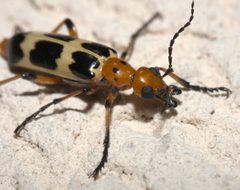
Pyrota palpalis, commonly known as the Charlie Brown blister beetle, is a of blister beetle in the Meloidae. The species occurs in Central America and North America. The derives from its distinctive color pattern reminiscent of the Peanuts character Charlie Brown's shirt. Like other blister beetles, it produces , a defensive compound toxic to vertebrates.

Pronunciation
How to pronounce Pyrota palpalis: /paɪˈroʊtə pælˈpeɪlɪs/
These audio files are automatically generated. While they are not always 100% accurate, they are a good starting point.
Identification
The "Charlie Brown blister beetle" refers to a distinctive color pattern that may aid identification, though specific diagnostic features for this are not documented in available sources. As a member of the Pyrota, it shares the general blister beetle body plan with soft, flexible . Definitive identification to species level within Pyrota typically requires examination of genitalic structures and other subtle morphological characters.
Images
Distribution
Central America and North America. GBIF records confirm presence in Middle America and North America.
Human Relevance
Like all blister beetles, P. palpalis produces , a defensive compound that can cause blistering on human skin upon contact. The has been observed in mating on flowers, a common in the Pyrota.
Similar Taxa
- Pyrota bilineataShares the same and general body form; P. bilineata is distinguished by orange coloration with two black pronotal spots and distinctive black and white longitudinal elytral stripes, and has been documented forming large mating on yellow rabbitbrush (Chrysothamnus viscidiflorus) in Utah.
More Details
Common name origin
The "Charlie Brown blister beetle" derives from the 's color pattern, which resembles the iconic shirt of the Peanuts comic strip character Charlie Brown.
Sources and further reading
- BugGuide
- Wikipedia
- GBIF taxonomy match
- iNaturalist taxon
- NCBI Taxonomy
- Meloidae Holdings | Entomology Research Museum
- Geoffrey Attardo's Landmark Research on Genomics of Tsetse Flies | Bug Squad
- Treasured Comments About Insects: Can We Hear a Collective 'Sigh?' | Bug Squad
- ID Challenge #8 | Beetles In The Bush
- Midget male meloid mates with mega mama | Beetles In The Bush
- Bug Eric: New Mexico Dragonfly Blitz - Day 1