
Octotemnus
Mellié, 1847
tree-fungus beetles
Species Guides
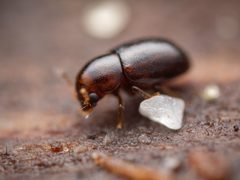
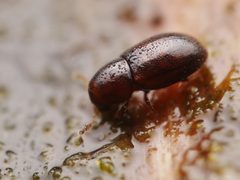
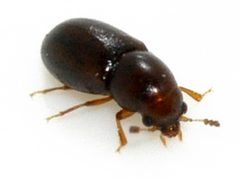
1Octotemnus is a of minute tree-fungus beetles in the Ciidae. in this genus are fungivores that inhabit and feed on the fruiting bodies of polypore fungi. Research on Octotemnus laminifrons has revealed substantial cryptic , with multiple genetically and morphologically distinct species previously hidden under one name. Some species have been documented to significantly reduce the reproductive of their fungi through feeding damage to the spore-producing hymenium.
Pronunciation
How to pronounce Octotemnus: /ˌɒk.toʊˈtɛm.nəs/
These audio files are automatically generated. While they are not always 100% accurate, they are a good starting point.
Identification
Identification to level requires examination of male genital structures; quantitative morphological analysis of these structures has revealed diagnostic differences among cryptic species. A key to species of Octotemnus from Kazakhstan has been published. The can be distinguished from related ciid genera by a combination of characters including antennal structure and body form, though specific diagnostic features for the genus itself are not detailed in the provided sources.
Images
Habitat
Associated with fruiting bodies of polypore fungi (bracket fungi), particularly in the Trametes, Lenzites, and Coriolus. Beetles inhabit the fungal fruit bodies where they feed and complete development.
Distribution
Recorded from Europe (including Scandinavia: Denmark, Norway, Sweden), Asia (Japan, Korea, Kazakhstan, China, Russia, Kyrgyzstan, Turkmenistan, Uzbekistan), with individual showing more restricted ranges. The has a Palearctic distribution with centers of diversity in East Asia.
Diet
fungivore; feeds on fungal tissue, specifically the fruiting bodies of polypore fungi. Documented fungi include Coriolus versicolor, Trametes , and Lenzites species. Feeding activity damages the hymenium, reducing spore production.
Host Associations
- Coriolus versicolor - fungusFruiting bodies inhabited and consumed by O. glabriculus; feeding reduces reproductive
- Trametes - fungus for cryptic within O. laminifrons complex; host use patterns differ among species
- Lenzites - fungus for cryptic within O. laminifrons complex
Life Cycle
Development occurs within fungal fruiting bodies. Specific details of larval development and are not documented in the provided sources.
Behavior
with documented negative impact on fungal reproductive . Octotemnus glabriculus has been shown to reduce the functional hymenium area of Coriolus versicolor by 58% through feeding activity. When co-occurring with Cis boleti, combined feeding reduces host fitness by 64%.
Ecological Role
Fungivore and fungal decomposer; acts as a significant consumer of polypore fungi with measurable effects on reproductive success. are tied to availability of fungal fruiting bodies.
Human Relevance
Serves as a study system for cryptic and - . Documented as host for fungus bassiana and as prey for pseudoscorpions (Chernes cimicoides).
Similar Taxa
- CisBoth are ciid beetles with similar fungivorous habits; distinguished by morphological characters including antennal club structure and body proportions
- SulcacisSympatric ciid found in similar ; distinguished by antennal and pronotal characters
- EnnearthronRelated ciid in the same tribe Orophiini; distinguished by body form and antennal structure
More Details
Cryptic species diversity
The O. laminifrons complex was found to comprise four distinct based on mitochondrial COI, nuclear markers, and genital : O. laminifrons sensu stricto, O. assimilis, O. crassus, and O. kawanabei. These species show divergent use patterns among Trametes and Lenzites fungi.
Natural enemies
Documented include the pseudoscorpion Chernes cimicoides. Documented include the fungus bassiana and a Bethylidae in the Cephalonomia.
Taxonomic history
The was described by Mellié in 1847. have been described from Europe (Gyllenhal, 1813, 1827; Mellié, 1848), Russia (Motschulsky, 1861), Japan (Miyatake, 1954; Kawanabe, 2002, 2005), China (Li, 1992), and Ukraine (Drogvalenko, 2002).
Sources and further reading
- BugGuide
- Wikipedia
- GBIF taxonomy match
- iNaturalist taxon
- NCBI Taxonomy
- Catalogue of Life
- Taxonomic review of the genus Octotemnus Mellié (Coleoptera: Tenebrionoidea: Ciidae) from Korea, with four unrecorded species associated with host fungi
- Divergent host use among cryptic species in the fungivorous ciid beetle Octotemnus laminifrons (Motschulsky, 1860), with descriptions of three new species from Japan
- Effects of fungivory by two specialist ciid beetles (Octotemnus glabriculus and Cis boleti) on the reproductive fitness of their host fungus, Coriolus versicolor
- The fauna of minute tree-fungus beetles (Coleoptera, Ciidae) of Kazakhstan. Report 2. Genera Ennearthron Mellié, 1847, Orthocis Casey, 1898, Sulcacis Dury, 1917, Octotemnus Mellié, 1847, Rhopalodontus Mellié, 1847 and Xylographus Mellié, 1847