
Cephalonomia
Westwood, 1833
Species Guides
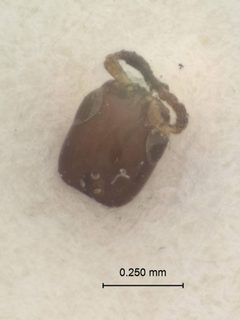
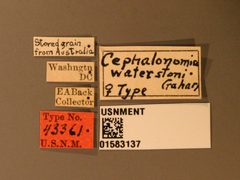
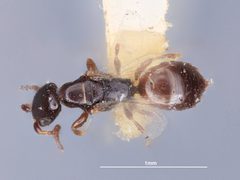
1- Cephalonomia waterstoni(parasitic grain wasp)
Cephalonomia is a of in the Bethylidae, containing over 20 described . Species within this genus are primarily known as agents targeting pests in stored grain and agricultural systems. C. stephanoderis is extensively used against the () in coffee-producing regions, while C. waterstoni and C. tarsalis target stored product beetles such as Laemophloeus ferrugineus and Oryzaephilus surinamensis. These wasps exhibit idiobiont parasitoid , with females attacking larvae or pupae.
Pronunciation
How to pronounce Cephalonomia: /ˌsɛfəloʊˈnoʊmiə/
These audio files are automatically generated. While they are not always 100% accurate, they are a good starting point.
Identification
Small, compact with reduced wing venation characteristic of Bethylidae. Males of C. waterstoni are distinguished from females by smaller size, less rectangular shape, longer , and brownish-black first flagellar segments (females have yellowish first flagellar segments). Sex ratios typically female-biased (approximately 2:1 in C. waterstoni). Specific identification requires examination of antennal structure, head shape, and genitalia.
Images
Habitat
Agricultural and stored product environments. C. stephanoderis occurs in coffee farms, targeting unharvested berries on trees. C. waterstoni and C. tarsalis inhabit grain storage facilities, warehouses, mills, and elevators. Hot spots with high are preferred for release and establishment.
Distribution
Widely distributed in association with commodities. C. stephanoderis is native to West Africa (Ivory Coast) and has been introduced to coffee-growing regions of Colombia, Puerto Rico, and other producing areas. C. waterstoni and C. tarsalis occur in grain storage systems across multiple continents. GBIF records indicate presence in Denmark, Norway, and Sweden.
Host Associations
- Hypothenemus hampei - primary ; attacked by C. stephanoderis
- Laemophloeus ferrugineus - primary rusty grain beetle; attacked by C. waterstoni
- Oryzaephilus surinamensis - primary sawtoothed grain beetle; attacked by C. tarsalis
- Cryptolestes ferrugineus - attacked by Cephalonomia spp.
Life Cycle
C. waterstoni completes development from to in 12–13 days at 90°F (32°C) and 65–75% relative humidity. C. stephanoderis has a mean time of 47.4 days. Females of C. waterstoni live approximately three weeks; males have shorter lifespans. C. stephanoderis produces a mean of 46.1 daughters per female. Oviposition timing and stage preference vary by : C. stephanoderis typically attacks and pupae, while related may prefer earlier instars.
Behavior
Females are idiobiont that paralyze before oviposition. C. stephanoderis exhibits both parasitization and of pupae, with predation rates exceeding parasitization in some conditions. Pollen feeding can enhance parasitization and predation rates—Arachis pintoi pollen increased parasitization by 135% and Ageratum conyzoides pollen increased predation by 225%. C. tarsalis actively hunts free-living grain larvae. Host stage selection is specific: C. stephanoderis prefers mature host stages within coffee berries. Releases are strategically timed after harvest periods when uncollected berries remain on trees.
Ecological Role
agent in agroecosystems and stored product protection. Reduces of economically significant pests without chemical intervention. Contributes to in coffee production and grain storage. Microbial associations (Actinomycetota-dominated in field populations) may influence performance but do not substantially alter core behavioral functions.
Human Relevance
Important agent for management in Latin American and Caribbean coffee production. Mass rearing programs produce for augmentative release in coffee farms. C. waterstoni and C. tarsalis have potential for biological control of stored product pests in warehouses, mills, and elevators. Laboratory rearing modifies microbial but largely preserves behavioral functionality.
Similar Taxa
- Prorops nasutaAlso a bethylid of ; distinguished by longer preoviposition period (17.3 vs. shorter in C. stephanoderis), greater longevity (63.1 days), lower reproductive rate (18.3 daughters per female), longer time (58.6 days), and preference for earlier instars (second-instar larvae vs. /pupae)
Sources and further reading
- BugGuide
- Wikipedia
- GBIF taxonomy match
- iNaturalist taxon
- NCBI Taxonomy
- Catalogue of Life
- THE BIOLOGY OF CEPHALONOMIA WATERSTONI GAHAN
- Liberaci�n de la avispita de costa de marfil Cephalonomia stephanoderis
- Host Preference of Cephalonomia Waterstoni Gahan, a Bethylid Parasitoid of Laemophloeus Species
- An Investigation on biology, parasite of Cephalonomia trasalia Ashm (Hym: Bethylidae) on saw-toothed grain beetle at southern region of Iraq.
- Biolog�a y comportamiento de la avispita de costa de marfil Cephalonomia stephanoderis parasitoide de la broca del caf�
- Temperature-Dependent Functional Response of the Parasitoid Cephalonomia waterstoni (Gahan) (Hymenoptera: Bethylidae) Attacking Rusty Grain Beetle Larvae (Coleoptera: Cucujidae)
- New Developments in Mass Production of Parasitoids Cephalonomia Stephanoderis (Hymenoptera: Bethylidae) on Hypothenemus Hampei (Coleoptera: Scolytidae) Reared Using Artificial Diet
- Hunting for moving hosts: Cephalonomia tarsalis, a parasitoid of free-living grain beetles
- Retracted: Abridged Life Tables for Cephalonomia stephanoderis and Prorops nasuta (Hymenoptera: Bethylidae) Parasitoids of Hypothenemus hampei (Coleoptera: Curculionidae: Scolytinae) Reared on Artificial Diet
- Behavioral and Microbial Profiling of the Bethylid Wasp Cephalonomia stephanoderis for Biocontrol of the Coffee Berry Borer
- Interaction of Mattesia oryzaephili (Neogregarinorida: Lipotrophidae) with Cephalonomia spp. (Hymenoptera: Bethylidae) and their hosts Cryptolestes ferrugineus (Coleoptera: Laemophloeidae) and Oryzaephilus surinamensis (Coleoptera: Silvanidae)
- Host Stage Selection and Suitability in Cephalonomia stephanoderis Betrem (Hymenoptera: Bethylidae), a Parasitoid of the Coffee Berry Borer
- Effect of Pollen Feed on Parasitization and Predatism of Cephalonomia stephanoderis onHypothenemus hampei
- Retraction to: “Abridged Life Tables for Cephalonomia stephanoderis and Prorops nasuta (Hymenoptera: Bethylidae) Parasitoids of Hypothenemus hampei (Coleoptera: Curculionidae: Scolytinae) Reared on Artificial Diet”
- The Biology of Cephalonomia Tarsalis (Ash.), a Vespoid Wasp (Bethylidae: Hymenoptera) Parasitic on the Sawtoothed Grain Beetle1