
Dinaraea aequata
(Erichson, 1837)
Dinaraea aequata is a small rove beetle (2.5–3.7 mm) in the Aleocharinae, native to Europe and parts of Asia. It is saproxylic, inhabiting subcortical galleries of decaying wood and fungal fruiting bodies. The was among the first in its to have its larval and described in detail, including all three instars, , and pupal cocoon.
Pronunciation
How to pronounce Dinaraea aequata: /dɪnəˈreɪə ɛˈkwɑːtə/
These audio files are automatically generated. While they are not always 100% accurate, they are a good starting point.
Identification
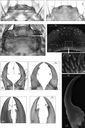
distinguished from similar Dinaraea by subtle differences in body flattening, coloration, and antennal structure. Mature larvae separable from D. linearis by coloration intensity, degree of body flattening, antennal segment proportions, crenation pattern of labral margin, tooth configuration, and mala structure. Diagnostic larval characters for Dinaraea include: narrow elongate dorso-ventrally flattened body form, specific antennal ratios, acorn-shaped sensory appendage on , crenate anterior labral margin, particular mandible and mala , and characteristic chaetotaxy patterns. L1 instar identifiable by bursters on thoracic and abdominal tergites, darker antennal segment III, longer urogomphi with subapical seta, and reduced setation compared to L2–3.
Images
Habitat
Saproxylic microhabitats including subcortical galleries of other insects, rotting tree trunks, and fruiting bodies of various polypore fungi. Specifically collected from birch bark remains in shady, damp deciduous woodland loess gullies.
Distribution
Europe (widespread), Russia (European and Siberian regions), Turkey, Armenia, Georgia, China (Heilongjiang), and Canada (New Brunswick).
Seasonality
active in autumn (collected November); larval development and occur through winter months under laboratory conditions (November–January).
Diet
Laboratory-reared larvae accepted small springtails (Onychiuridae) as prey. Natural diet presumed predatory but unconfirmed; likely preys on other small in subcortical .
Life Cycle
Complete with three larval instars (L1, L2–3), prepupal stage, and pupa enclosed in constructed cocoon. L1 distinct from subsequent instars in chaetotaxy, presence of bursters, antennal pigmentation, and urogomphus proportions. Development from egg to spans several months under laboratory conditions at 20°C ± 3.
Behavior
Inhabits subcortical spaces likely as an active . Constructs pupal cocoon for .
Ecological Role
Potential in dead wood ; may contribute to of forest pests due to predatory habits in subcortical , though direct evidence from natural is lacking.
Human Relevance
Interest primarily scientific; detailed larval description contributes to understanding of aleocharine and . Potential unexplored value in forest pest management due to predatory lifestyle in economically relevant .
Similar Taxa
- Dinaraea linearisCongeneric with very similar and ecological preferences; and larvae distinguished by subtle differences in body coloration, degree of flattening, antennal structure, labral margin crenation, teeth, and mala structure.
More Details
Larval chaetotaxy significance
The chaetotaxy differences between L1 and L2–3 in Dinaraea correspond with molecular marker-based relationships among Athetini (Dinaraea), Oxypodini (Thiasophila), and Homalotini (Gyrophaena), supporting the phylogenetic utility of these larval characters.
Type of first description
First description of larval for any Dinaraea , published in 2018, nearly 180 years after the species was originally described by Erichson in 1837.