
Gyrophaena
Mannerheim, 1830
Species Guides
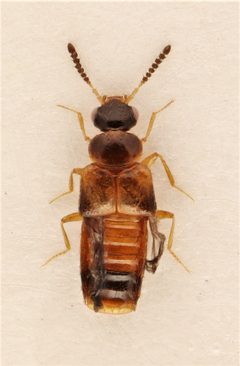
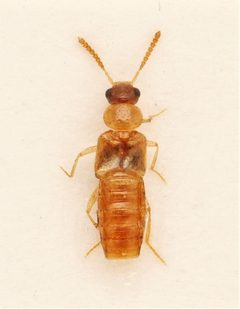
9Gyrophaena is a of rove beetles (Staphylinidae: Aleocharinae) comprising more than 160 described . The genus is strongly associated with fungal fruiting bodies, particularly basidiomycete polypores and other wood-decaying fungi on dead wood. Both and larvae are mycophagous and develop within fungal substrates.
Pronunciation
How to pronounce Gyrophaena: /dʒaɪrəˈfiːnə/
These audio files are automatically generated. While they are not always 100% accurate, they are a good starting point.
Identification
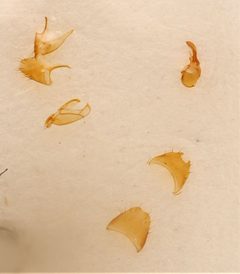
Gyrophaena are small rove beetles characterized by their compact, rounded body form and short typical of the . A key to subgenera and species is available for regional faunas such as Ukraine. Larvae can be distinguished by their association with fungal fruiting bodies and specific morphological features described for several British species.
Images
Habitat
Strictly associated with fungal fruiting bodies, particularly basidiomycete polypores and other wood-decaying fungi growing on dead wood. Saproxylic dependence has been documented for such as G. boleti.
Distribution
Widespread in the Palearctic region with records from Ukraine (21 ), the United Kingdom, and Scandinavia (Denmark, Norway, Sweden). Some species have restricted ranges, such as G. nigra in the Carpathians and G. orientalis in southern steppe zones.
Diet
Mycophagous (fungus-feeding). and larvae feed on basidiomycete fungal tissues.
Host Associations
- Basidiomycete fungi - food source and development siteParticularly polypores and other wood-decaying fungi on dead wood
- Fomitopsis pinicola - obligatory associationDocumented for G. boleti
Life Cycle
Larvae develop within fungal fruiting bodies. The larval stage is obligatory saproxylic and mycophagous for at least some .
Behavior
Strongly philopatric to fungal fruiting bodies. and larvae are consistently found in polypores and other basidiomycete fruiting bodies. Tergal gland system present and implicated in defensive or communicative functions.
Ecological Role
Decomposer associated with wood-decaying fungi in forest . Contributes to nutrient cycling through consumption and processing of fungal tissues in dead wood .
Similar Taxa
- Other Aleocharinae rove beetlesGyrophaena is distinguished by its compact body form and strict mycophagous habit; other aleocharines occupy diverse including soil, leaf litter, and nests
More Details
Taxonomic history
The was established by Mannerheim in 1830. Recent taxonomic revisions include new synonymy (G. nigra = G. manca) and new country records.
Regional diversity
Twenty-one are recorded from Ukraine, including five first records: G. joyi, G. joyioides, G. orientalis, G. pseudonana, and G. williamsi.
Sources and further reading
- BugGuide
- Wikipedia
- GBIF taxonomy match
- iNaturalist taxon
- NCBI Taxonomy
- Catalogue of Life
- Rove Beetles of the Genus Gyrophaena (Coleoptera, Staphylinidae, Aleocharinae) of Ukraine
- The larvae of some British species of Gyrophaena Mannerheim (Coleoptera: Staphylinidae) with notes on the taxonomy and biology of the genus
- Larva ofGyrophaena boleti(Linnaeus, 1758) (Coleoptera: Staphylinidae) — An Obligatory Saproxylic and Mycophagous Species Associated withFomitopsis pinicola: Notes on Tergal Gland System and Behaviour