Athetina
Casey, 1910
Genus Guides
15- Acrotona
- Amischa
- Atheta(Vexing Rove Beetles)
- Boreostiba
- Dinaraea
- Liogluta
- Lypoglossa
- Microdota
- Mocyta
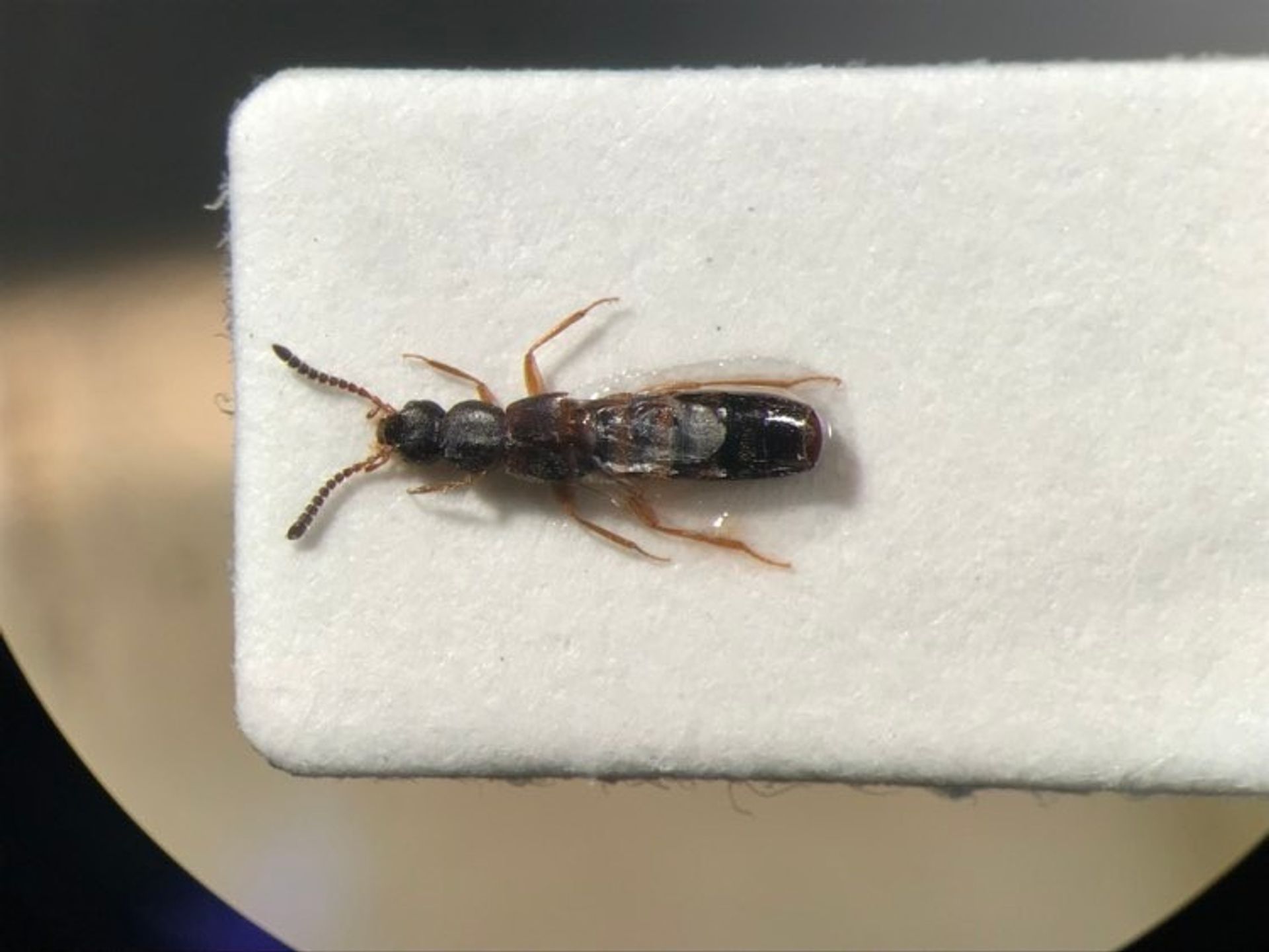
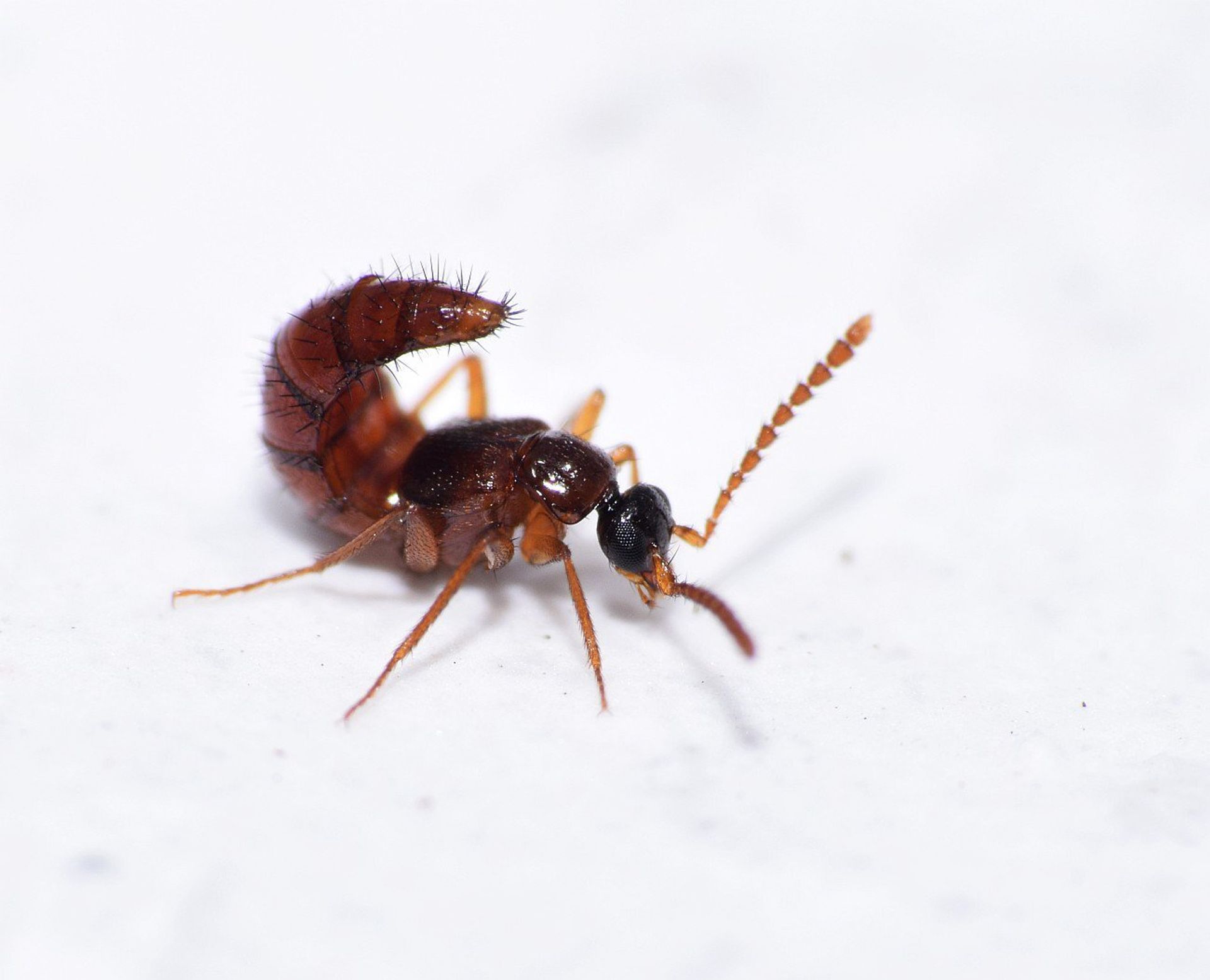
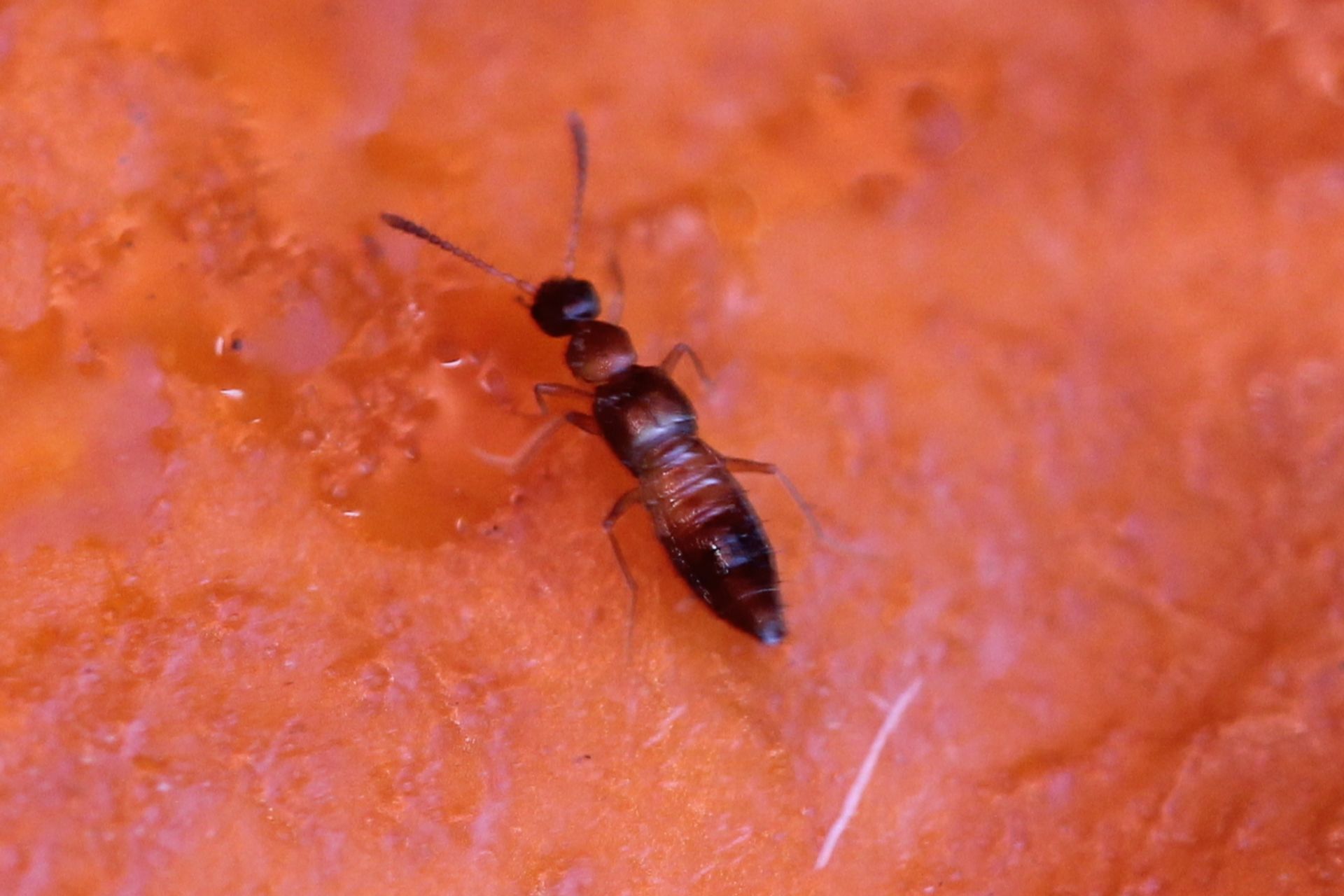
Athetina is a subtribe of rove beetles within the Staphylinidae, established by Casey in 1910. Members belong to the diverse Aleocharinae, one of the largest groups within the rove beetles. The subtribe encompasses multiple of small to minute beetles characterized by reduced that expose most of the . Athetina are primarily soil-dwelling and associated with decaying organic matter.
Pronunciation
How to pronounce Athetina: /æˈθɛtɪnə/
These audio files are automatically generated. While they are not always 100% accurate, they are a good starting point.
Identification
Athetina are distinguished from other aleocharine rove beetles by subtle morphological features of the mouthparts and genitalia, particularly the structure of the and spermatheca. Reliable identification to subtribe level requires examination of microscopic characters including the arrangement of on the labial palps and details of the tarsal formula. Members are generally small (2-5 mm), slender, with short covering less than half the , and relatively uniform brown to black coloration.
Images
Habitat
within Athetina inhabit soil and leaf litter in forested and open environments. They are frequently collected from decaying plant matter, compost, moss, and fungal fruiting bodies. Some species occur in riparian zones and wetland margins. The subtribe shows broad ecological across temperate and tropical regions.
Distribution
Athetina has a distribution with documented occurrences across North America, Europe, Asia, and Australia. Records are concentrated in temperate regions, with fewer documented in tropical zones relative to overall Aleocharinae diversity. The subtribe is well-represented in the Holarctic region.
Ecological Role
Members of Athetina function as and scavengers in soil and litter . They contribute to nutrient cycling by consuming small and decaying organic material. Their presence indicates established decomposition processes in terrestrial .
Similar Taxa
- GeostibinaAnother subtribe within Athetini; Geostibina generally possess more pronounced pronotal characters and different aedeagal structures, though microscopic examination is required for reliable separation.
- Athetini (remaining subtribes)Other subtribes in the tribe Athetini, including Lomechusina and Myrmedonota, differ in ecological associations (many are myrmecophilous) and possess distinct genitalic morphologies.
More Details
Taxonomic History
The subtribe Athetina was originally proposed by Casey in 1910 but has undergone repeated revision. Modern classifications rely heavily on molecular to define subtribal boundaries, as morphological characters are often convergent within Aleocharinae.
Research Status
Athetina remains taxonomically challenging, with many undescribed and generic limits poorly resolved. The subtribe has received substantial iNaturalist documentation (over 2,700 observations), though many records lack identification beyond or level.