
Pinodytes
Horn, 1880
Species Guides
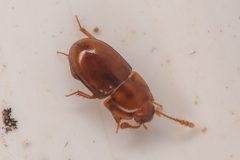
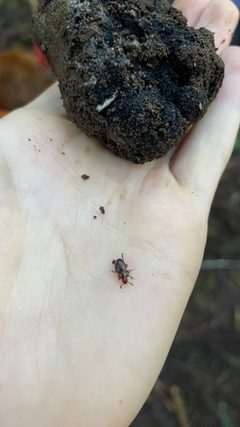
4Pinodytes is a of small, eyeless beetles in the Leiodidae, containing at least 40 described . These beetles are exclusively subterranean, inhabiting soil where they feed on fungal material. The genus was established by Horn in 1880 and belongs to the tribe Catopocerini within the Catopocerinae. Their eyeless condition reflects complete to life in darkness.
Pronunciation
How to pronounce Pinodytes: //ˌpɪnoʊˈdaɪtiːz//
These audio files are automatically generated. While they are not always 100% accurate, they are a good starting point.
Identification
Distinguished from other Leiodidae by the combination of complete eyelessness and soil-dwelling . Within Catopocerinae, separation from related such as Catopocerus requires examination of subtle morphological characters including structure, pronotal shape, and male genitalia. The genus is restricted to North America, which aids in geographic separation from some Old World catopocerine genera.
Images
Appearance
Small beetles with complete absence of , a trait shared by all in the . Body form is compact and presumably adapted for moving through soil interstices. As members of Leiodidae, they likely possess the characteristic of clubbed , though specific morphological details for the genus as a whole are not well documented in available sources.
Habitat
Strictly subterranean, inhabiting soil environments. Specific soil type preferences are not documented at the level, though in this group are generally associated with moist, organic-rich soils.
Distribution
North America. The appears to have a broad distribution across the continent, though precise range boundaries are not established in available sources.
Diet
Fungivorous; feeds on fungal material in soil.
Behavior
Subterranean, with activity restricted to soil matrix. Eyeless condition indicates complete dependence on non-visual sensory modalities for navigation and foraging.
Ecological Role
Contributes to soil nutrient cycling through , processing fungal in subterranean .
Similar Taxa
- CatopocerusAlso eyeless and subterranean within Catopocerinae; distinguished by geographic distribution (Catopocerus occurs in both North America and Eurasia) and subtle morphological differences in and body proportions
- Other Leiodidae generaMost other leiodid possess functional and are not exclusively subterranean; surface-dwelling habits and presence of eyes separate them from Pinodytes
More Details
Taxonomic history
The was described by George Henry Horn in 1880 and has remained within Catopocerinae, a characterized by small, often eyeless, soil-inhabiting beetles. The high count (40+ described) suggests substantial diversity, though many species likely remain poorly known due to their cryptic .