Omorgus tesselatus
LeConte, 1854
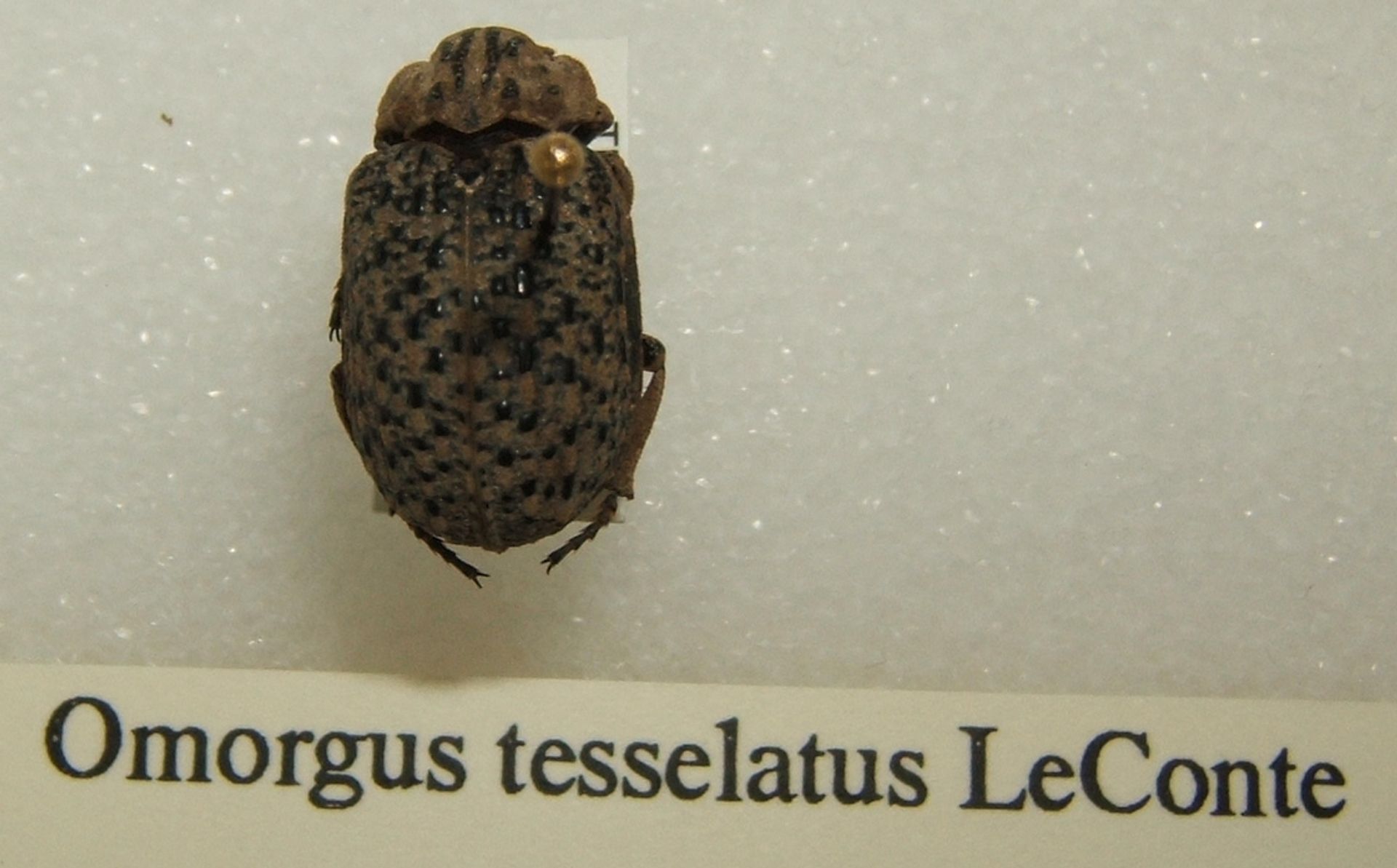
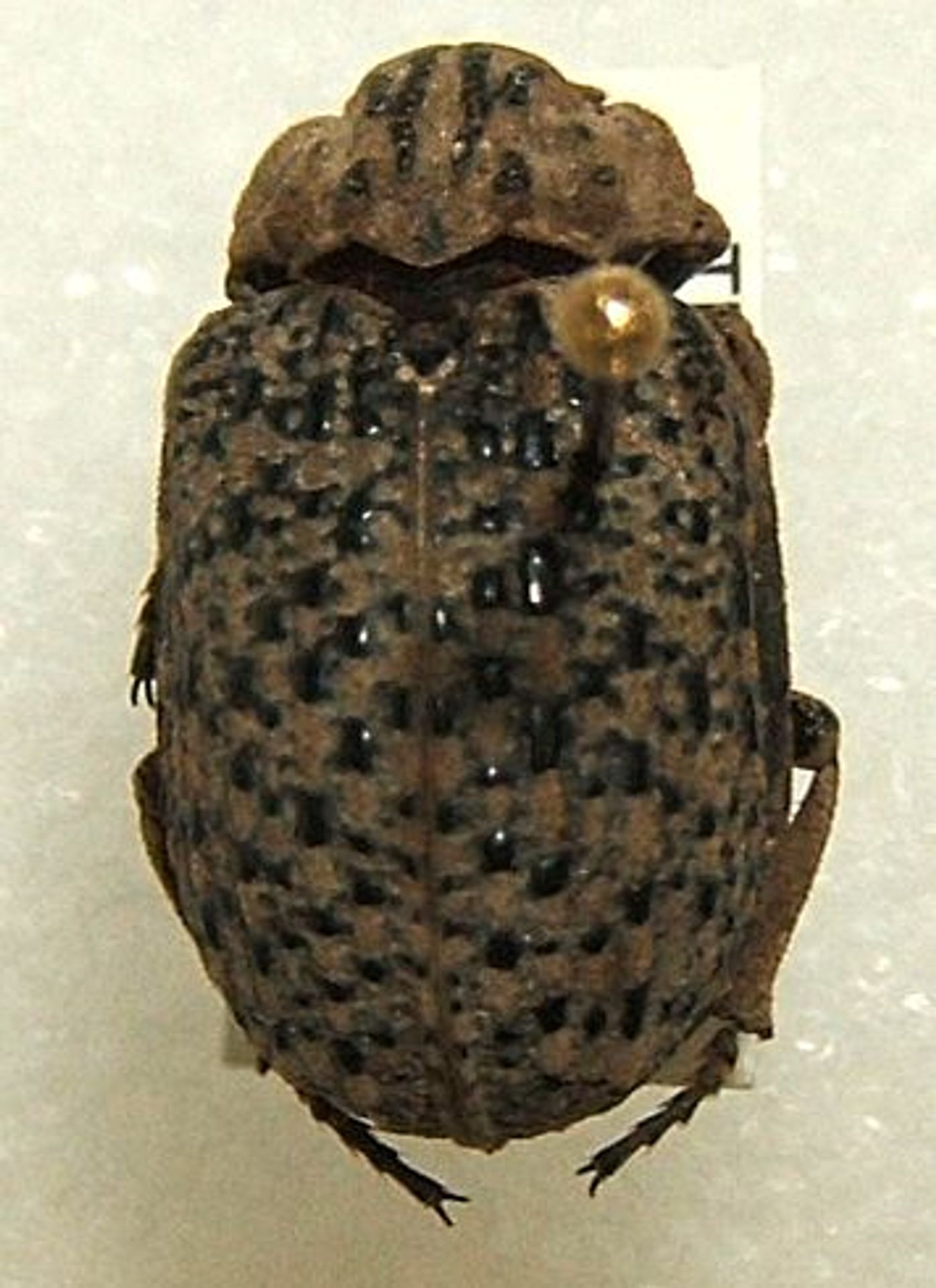
Omorgus tesselatus is a of hide beetle in the Trogidae, first described by John Lawrence LeConte in 1854. Like other members of this family, it is a scavenger associated with decomposing animal matter. The species occurs in arid and semi-arid regions of western North America and Mexico. have been observed active at night in sandy , where they may be encountered on the ground or attracted to ultraviolet light sources.
Pronunciation
How to pronounce Omorgus tesselatus: /oʊˈmɔːrɡəs ˌtɛsəˈleɪtəs/
These audio files are automatically generated. While they are not always 100% accurate, they are a good starting point.
Identification
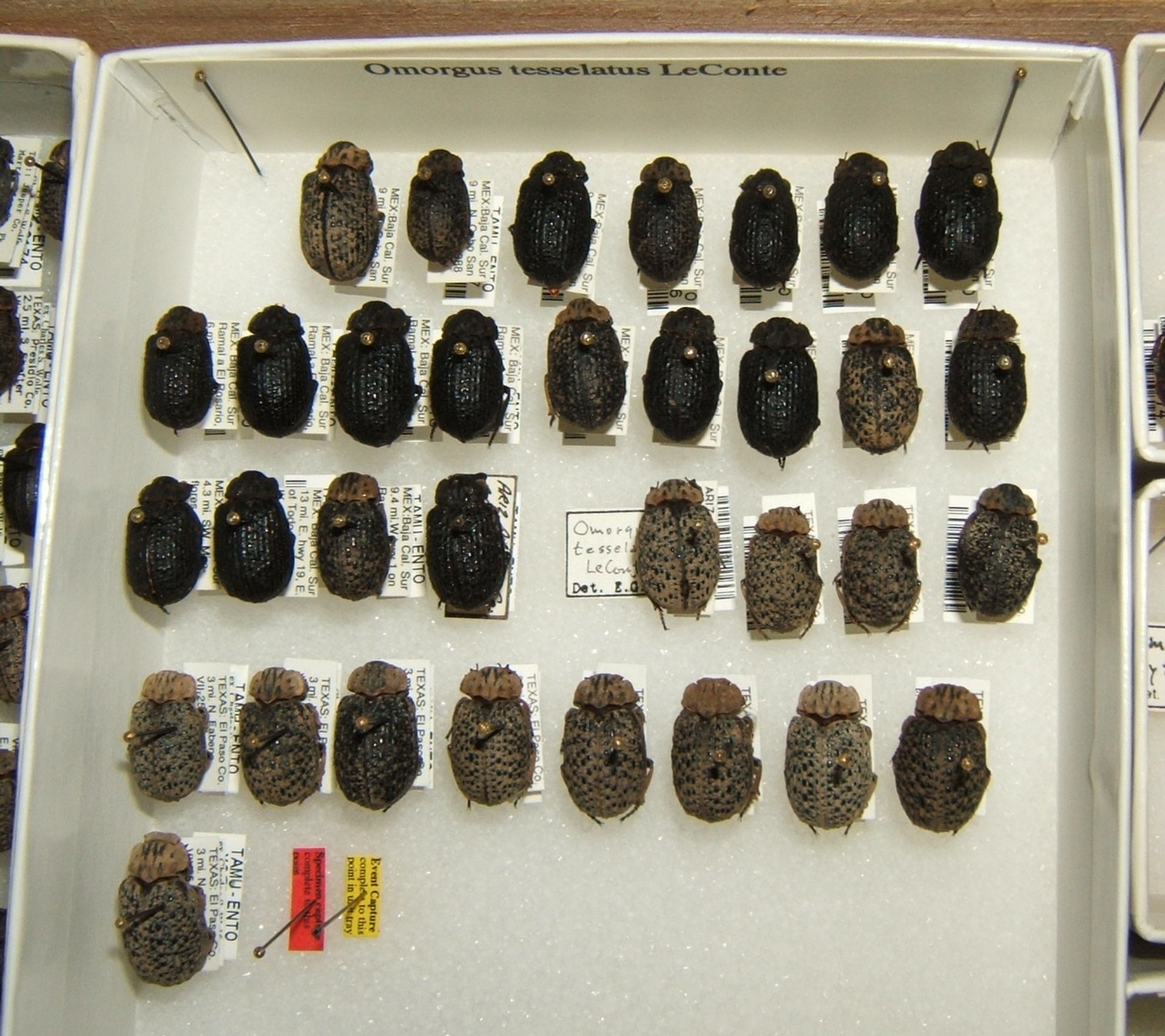
Distinguished from other Omorgus by the specific pattern of surface sculpturing and body proportions, though precise diagnostic features require examination of detailed taxonomic literature. Within the , O. tesselatus may be recognized by the combination of its geographic range and specific elytral tuberculation patterns. Separated from other Trogidae genera by the structure of the antennal club and pronotal shape. Specimen-level identification typically requires comparison with reference collections.
Images
Habitat
Arid and semi-arid environments including sand dune systems, desert scrub, and dry grasslands. Associated with sandy substrates where it has been observed on the ground at night. The shows affinity for open, sparsely vegetated areas with loose soil.
Distribution
Nearctic region: recorded from South Dakota, USA. Neotropical region: Mexico (Baja California, Guerrero, Morelos, Nayarit, Sinaloa, Sonora). The disjunct distribution between the northern Great Plains and western Mexican states suggests possible additional unrecorded in intervening arid regions.
Seasonality
have been collected in April and June, suggesting spring to early summer activity in temperate portions of the range. Activity patterns likely track seasonal availability of carrion and moisture conditions in arid .
Diet
Scavenger; feeds on dried animal remains, hides, and keratinous materials such as hair, feathers, and horns. Specific dietary records for this are not documented, but feeding habits are inferred from -level .
Life Cycle
Complete with , larval, pupal, and stages. Larvae develop within or beneath decomposing animal matter. Detailed specific to this has not been published.
Behavior
Nocturnally active; have been observed on sand at night and attracted to ultraviolet light sources. This facilitates detection by collectors in dune .
Ecological Role
Decomposer and nutrient cycler; contributes to breakdown of animal carcasses and recycling of nitrogen and other nutrients in arid where decomposition rates are otherwise slow.
Human Relevance
Minor forensic interest as an indicator of carcass age in arid environments, though less studied than some related . No significant economic impact; occasionally collected by entomologists.
Similar Taxa
- Omorgus nodosusSimilar size and preference in southwestern sand dune systems; distinguished by details of pronotal and elytral tuberculation, and or parapatric distribution in some areas.
- Omorgus suberosusOverlapping Mexican distribution and similar general appearance; requires examination of surface sculpturing and male genitalia for definitive separation.
- Trox spp.Related in Trogidae with similar scavenging ; generally separable by body form, antennal structure, and geographic range, though some overlap in distribution.
More Details
Taxonomic history
Originally described by LeConte in 1854, the has remained relatively understudied compared to some . The disjunct distribution pattern suggests potential for cryptic diversity or historical biogeographic connections between the Great Plains and western Mexico.
Collection notes
The appears to be encountered infrequently even by active collectors in appropriate , suggesting either genuinely low abundance or specific microhabitat requirements that are not always sampled. Night collecting with ultraviolet lights in sandy areas has proven effective where the species occurs.