
Omorgus nodosus
(Robinson, 1940)
skin beetle
Omorgus nodosus is a of in the Trogidae. It has been documented in sandy of the southwestern United States and northern Mexico, where it is active nocturnally. The species feeds on dried animal matter, with observations of individuals feeding on dried dog . It occurs in association with sand dune , where it has been found on sand surfaces at night.
Pronunciation
How to pronounce Omorgus nodosus: //ˈoʊmɔːrɡəs ˈnoʊdəsəs//
These audio files are automatically generated. While they are not always 100% accurate, they are a good starting point.
Identification
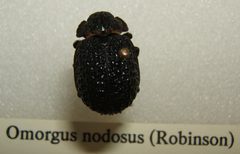
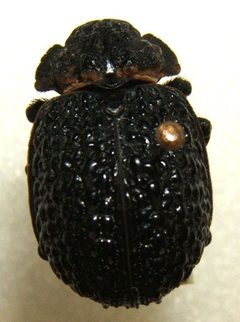
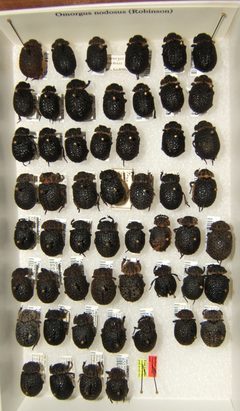
Omorgus nodosus can be distinguished from other Omorgus by its strongly tuberculate (nodose) pronotum and , with prominent raised giving the species its specific epithet. The body is robust and heavily sclerotized, typical of Trogidae. Specific diagnostic characters separating it from in the southwestern U.S. region require examination of tubercle arrangement and , as well as male genitalia.
Images
Habitat
Sand dune and sandy areas in arid and semi-arid regions. Documented from Mescalero Sand Dunes in New Mexico and similar sandy in west Texas. Active in open sandy areas with sparse vegetation, including dunes with blowouts and classic sand flora.
Distribution
Nearctic region: United States (New Mexico, Texas). Neotropical region: Mexico (Chihuahua). Records indicate presence in the Chihuahuan Desert and adjacent areas.
Seasonality
Active during summer months. Documented observations from June, with active at dusk and during nighttime hours.
Diet
Feeds on dried animal matter. Specifically observed feeding on dried dog at night in sand dune .
Behavior
Nocturnally active. have been observed on sand surfaces at night, making tracks in the sand. Attracted to lights at night in some instances.
Ecological Role
Decomposer; contributes to nutrient cycling in sandy desert through consumption of dried animal matter.
Similar Taxa
- Omorgus suberosusWidespread North American in same , but O. nodosus distinguished by more pronounced tuberculation and southwestern distribution.
- Other Omorgus species contains multiple with overlapping ranges; precise identification requires examination of patterns and male genitalia.