
Omorgus suberosus
(Fabricius, 1775)
hide beetle
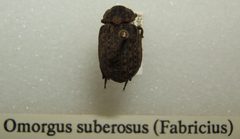
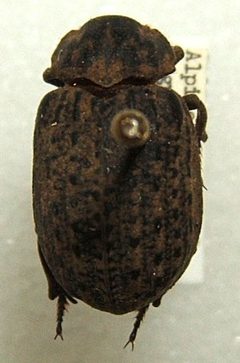
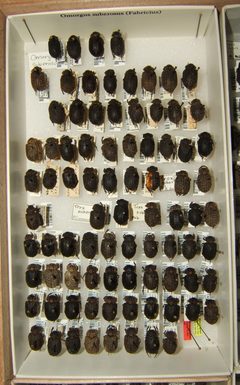
Omorgus suberosus, commonly known as the hide beetle, is a of carrion beetle in the Trogidae. measure 11–14 mm in length and possess a distinctive rough, convex surface covered with ridges and . The species has a remarkably broad distribution spanning multiple continents, including the Americas, Europe, Australia, and parts of Asia and the Pacific. It is primarily associated with carrion and decomposing animal matter, playing a role in nutrient cycling. Adults are known to overwinter, suggesting seasonal activity patterns in temperate regions.
Pronunciation
How to pronounce Omorgus suberosus: /oʊˈmɔːrɡəs suːbəˈroʊsəs/
These audio files are automatically generated. While they are not always 100% accurate, they are a good starting point.
Images
Appearance
are 11–14 mm in length. The surface is convex and very rough, with prominent ridges and giving a sculptured appearance. Coloration is pale brown. The pronotum bears long, fine setae. The overall texture and coloration provide camouflage against soil and decomposing substrates.