
Dinacoma caseyi
Blaisdell, 1930
Casey's June beetle
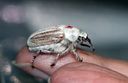
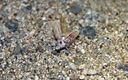
Dinacoma caseyi, commonly known as Casey's June beetle, is a rare scarab beetle to a restricted area in Riverside County, California. The is listed as endangered under the U.S. Act, with approximately 237 hectares designated as critical . The belongs to the Dinacoma, which contains only a few species of June beetles found in western North America.

Pronunciation
How to pronounce Dinacoma caseyi: //daɪˈnɑːkoʊmə ˈkeɪsaɪ//
These audio files are automatically generated. While they are not always 100% accurate, they are a good starting point.
Images
Habitat
The occurs in sandy soils of coastal sage scrub and chaparral in the southern California region. Critical habitat designation includes specific areas in Riverside County where the 's sandy substrate requirements are met.
Distribution
to a restricted area in Riverside County, southern California, USA. The has an extremely limited geographic range, with all known occurrences confined to this single county.
Seasonality
are active during June, as indicated by the "June beetle." This seasonal activity pattern is typical for members of the Dinacoma and related melolonthine scarabs.
Human Relevance
The has significant conservation importance due to its endangered status. Human activities including urban development, sand mining, and recreational vehicle use in its sandy have contributed to declines. The U.S. Fish and Wildlife Service designated critical habitat to protect remaining populations.
More Details
Conservation Status
Listed as endangered under the U.S. Act. Critical was designated in 2012, covering approximately 587 acres (237 hectares) in Riverside County, California.
Taxonomic History
Originally described by Blaisdell in 1930. The Dinacoma was established by Casey in 1889 and contains few , all restricted to western North America.