
Dinacoma
Casey, 1889
Species Guides
3- Dinacoma caseyi(Casey's June beetle)
- Dinacoma marginata
- Dinacoma sanfelipe
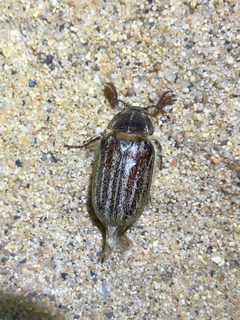
Dinacoma is a small of scarab beetles in the Scarabaeidae, Melolonthinae. The genus contains three described : D. caseyi, D. marginata, and D. sanfelipe, all restricted to southern California. Two additional undescribed have been identified from the Hemet area and Joshua Tree National Park, respectively. The genus is notable for its limited geographic range and the endangered status of D. caseyi.
Pronunciation
How to pronounce Dinacoma: /dɪˈnækəmə/
These audio files are automatically generated. While they are not always 100% accurate, they are a good starting point.
Identification
Dinacoma are distinguished from related melolonthine scarabs by morphological characters of the male genitalia. D. caseyi is the most morphologically divergent species in the . The undescribed Hemet differs from D. marginata in having paler coloration and distinct genital . The Joshua Tree population is geographically isolated from other known Dinacoma by the Little San Bernardino Mountains.
Images
Distribution
Southern California, USA. Known from localities near Hemet, Joshua Tree National Park (Covington Flats), and other sites within the region.
Human Relevance
Dinacoma caseyi (Casey's ) has been subject to petition for listing under the U.S. Act, with a 12-month finding published by the U.S. Fish and Wildlife Service in 2007. The has been the focus of taxonomic and conservation attention due to its restricted range and apparent rarity.
Similar Taxa
- Other MelolonthiniDinacoma can be distinguished from other melolonthine scarabs by unique genital and its restricted southern California distribution.
More Details
Taxonomic history
The was revised by Blaisdell in 1930, who described D. caseyi. The most recent , D. sanfelipe, was described in 2020. Two additional await formal description.
Undescribed taxa
Specimens from near Hemet, California, and from Covington Flats in Joshua Tree National Park represent distinct lineages within the D. marginata group, but remain undescribed as of 2022.