
Diplotaxis brevicollis
LeConte, 1856
short-necked scarab
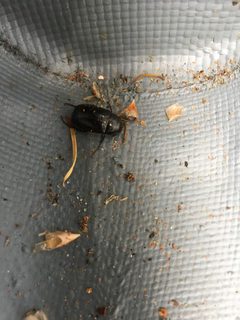
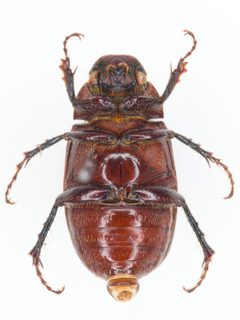
Diplotaxis brevicollis is a small scarab beetle in the Scarabaeidae, Melolonthinae. The is distributed across western North America from Canada through the Rocky Mountains to Mexico. are known to aggregate on low vegetation, apparently to detect trails for mate location. The specific epithet 'brevicollis' refers to the short-necked appearance of this .
Pronunciation
How to pronounce Diplotaxis brevicollis: /ˌdɪpləˈtæksɪs ˌbrɛvɪˈkɒlɪs/
These audio files are automatically generated. While they are not always 100% accurate, they are a good starting point.
Identification
Diplotaxis brevicollis can be distinguished from other Diplotaxis by its relatively short pronotum (giving a 'short-necked' appearance, referenced in the specific epithet). The species is small in size compared to many scarab beetles. Accurate identification typically requires examination of genitalia and comparison with .
Images
Habitat
Found in arid and semi-arid environments including sand dunes, grasslands, and open rangeland. Associated with low vegetation where aggregate. The occurs in with sufficient moisture to support plants, often following rainfall events that trigger insect .
Distribution
Western North America: Canada (Alberta, British Columbia), USA (Rocky Mountain states, Pacific Coast states, Colorado, New Mexico, Texas), and Mexico (Chihuahua, Durango, Sinaloa).
Seasonality
active from late spring through summer, with peak activity following rainfall events. June collections have been documented in New Mexico and Texas.
Behavior
have been observed forming on low plants, where they appear to 'catch' trails to locate mates. This represents a mate-finding strategy where males and females congregate in response to chemical cues. The is nocturnally active and has been collected at lights, though some individuals may not fly readily to lights.
Similar Taxa
- Other Diplotaxis speciesSimilar small size and general scarab ; D. brevicollis distinguished by short pronotum and specific genitalic characters
- Polyphylla speciesSimilar size and light-attracted ; Polyphylla are larger with more elaborate and different body proportions
More Details
Etymology
The specific epithet 'brevicollis' derives from Latin 'brevis' (short) and 'collis/collum' (neck), referring to the relatively short pronotum that gives the its characteristic appearance.
Collection notes
The is mentioned in entomological literature as being sought by collectors in sand dune . One collector noted failing to find D. brevicollis in the Mescalero Dunes in the 1980s, suggesting patchy distribution or specific habitat requirements.
Sources and further reading
- BugGuide
- GBIF taxonomy match
- iNaturalist taxon
- NCBI Taxonomy
- Catalogue of Life
- Meloidae Holdings | Entomology Research Museum
- Springing into action – oil beetles and citizen science! - Buglife Blog - Buglife
- An Unconventional Home for the Gold-fringed Mason Bee - Buglife Blog - Buglife
- Cartref Anghonfensiynol i’r Saerwenynen Eddi Aur - Buglife Blog - Buglife
- 2018 New Mexico/Texas Insect Collecting Trip “iReport” | Beetles In The Bush
- Bug Eric: New Mexico Night Bugs