
Osmodermatini
Schenkling, 1922
Hermit Beetles
Genus Guides
1- Osmoderma(Typical Hermit Beetles)
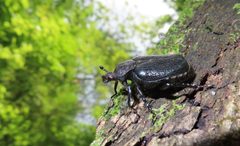
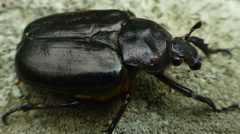
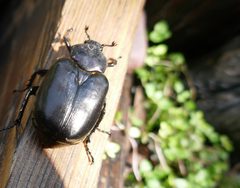
Osmodermatini is a tribe of scarab beetles within the Cetoniinae, commonly known as hermit beetles. The group includes the Osmoderma and related , characterized by their association with decaying wood in mature forests. These beetles are of conservation concern in many regions due to loss.
Pronunciation
How to pronounce Osmodermatini: //ˌɒzməˌdɜːrməˈtiːnaɪ//
These audio files are automatically generated. While they are not always 100% accurate, they are a good starting point.
Identification
Members of Osmodermatini are distinguished from other Cetoniinae by a combination of features including a dorsoventrally flattened body form, clubbed with segments that can be folded together, and often a metallic or matte brown to black coloration. The pronotum typically has distinctive lateral margins. They lack the strongly convex body shape seen in many flower chafers.
Images
Habitat
Old-growth and mature deciduous forests with abundant standing and fallen dead wood, particularly oak, beech, and other hardwoods. Requires hollow trees and substantial decaying wood for larval development.
Distribution
Holarctic distribution, with primary occurrence in Europe and eastern North America. European are concentrated in central and eastern regions where ancient woodland persists.
Seasonality
are active from June to September in temperate regions, with peak activity in July and August. Activity is primarily and .
Diet
feed on tree sap, decaying fruits, and other fermenting plant matter. Larvae develop in decaying heartwood of hollow trees, feeding on wood decay products and associated microorganisms.
Host Associations
- Quercus - larval development in decaying woodhollow oak trees
- Fagus - larval development in decaying woodhollow beech trees
- Acer - larval development in decaying woodhollow maple trees
- Tilia - larval development in decaying woodhollow linden trees
Life Cycle
Complete with prolonged larval development. Larvae require 3-5 years to develop in decaying heartwood, making them dependent on long-persistent dead wood . occurs in wood cavities, with emerging in summer.
Behavior
are primarily and , with limited activity. They are attracted to fermenting odors and tree wounds. Males produce a distinctive fruity odor from cephalic glands, used in mate attraction. Adults are long-lived, surviving 4-8 weeks.
Ecological Role
Larvae contribute to wood decomposition and nutrient cycling in forest . The presence of Osmodermatini larvae indicates mature forest conditions with continuous dead wood availability. serve as prey for birds and mammals.
Human Relevance
Several are protected under European conservation legislation due to decline from old-growth forest loss. Osmoderma eremita is a flagship species for saproxylic conservation in Europe. Larval presence is used as an indicator of woodland quality.
Similar Taxa
- CetoniiniMore convex body shape, often with brighter coloration and patterns; frequently visit flowers rather than tree sap; larvae develop in soil or compost rather than wood cavities.
- TrichiiniGenerally smaller size, more pubescent body surface, and different antennal club structure; associated with flowers and rotting material on ground rather than standing hollow trees.
- GoliathiniMuch larger body size in most , tropical distribution primarily, and distinct pronotal structure; not associated with temperate forest dead wood .
More Details
Conservation status
Multiple Osmodermatini are listed in the EU Directive Annex II and IV, requiring designation of Special Areas of Conservation. declines correlate with forestry intensification and removal of veteran trees.