
Rhyssemus germanus
(Linnaeus, 1767)
Rhyssemus germanus is a small aphodiine dung beetle in the Scarabaeidae, originally described by Linnaeus in 1767. It has a broad distribution spanning the Palearctic, Nearctic, and Oriental regions. The belongs to the tribe Psammodiini, which are typically associated with sandy .
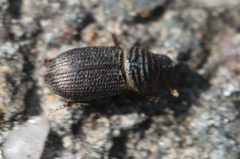
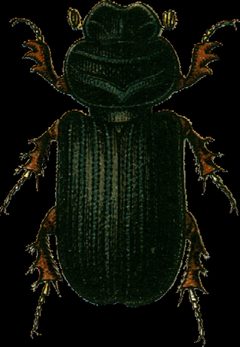
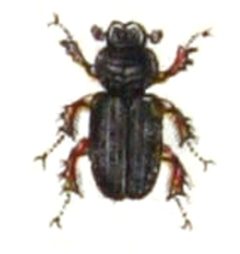
Pronunciation
How to pronounce Rhyssemus germanus: //rɪˈsiːməs dʒɜːrˈmeɪnəs//
These audio files are automatically generated. While they are not always 100% accurate, they are a good starting point.
Images
Distribution
Recorded from Europe and Northern Asia (excluding China), North America (Canada: Ontario, Quebec), and parts of the Oriental region including India (Andaman & Nicobar Islands, Chhattisgarh, Haryana, Madhya Pradesh, Uttarakhand). Palearctic records include Albania, Algeria, Belarus, Belgium, Bosnia Herzegovina, Georgia, Iran, Kazakhstan, Libya, Lithuania, Montenegro, Morocco, Russia (including Far East), Saudi Arabia, Serbia, Slovakia, Sweden, Tunisia, and Ukraine.
More Details
Taxonomic Note
This should not be confused with Xylosandrus germanus (Blandford, 1894), an ambrosia beetle in the Curculionidae ( Scolytinae) commonly known as the black stem borer. The similar specific epithet and overlapping geographic distribution in North America create potential for misidentification, but these species belong to entirely different families with distinct morphologies and ecologies.