
Odontotaenius
Kuwert, 1896
bess beetles, horned passalus, betsy beetle
Species Guides
2- Odontotaenius disjunctus(patent-leather beetle)
- Odontotaenius floridanus(Archbold bess beetle)
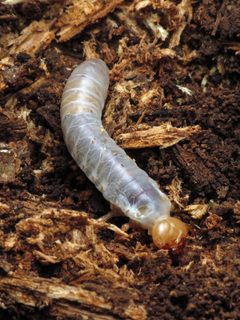
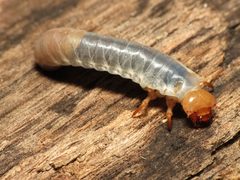
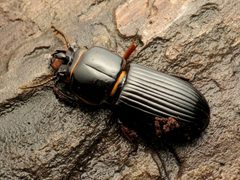
Odontotaenius is a of bess beetles (Passalidae) comprising approximately 11 described . These beetles are specialized decomposers of decaying wood, exhibiting complex subsocial including cooperative care, stridulation, and infanticide. The genus has been extensively studied for its gut microbiome, which includes cellulose- and xylan-degrading bacteria essential for lignocellulose digestion. Several species serve as for diverse phoretic mites and pseudoscorpions.
Pronunciation
How to pronounce Odontotaenius: /oʊˌdɒntoʊˈtiːniəs/
These audio files are automatically generated. While they are not always 100% accurate, they are a good starting point.
Images
Habitat
Decaying wood and rotting logs in tropical and temperate forest zones. Beetles inhabit burrows within decaying logs, with specific microhabitat use including spaces under bark and within wood fiber matrices.
Distribution
North America (United States, Mexico), with distributed across the eastern United States and six Mexican states. The occurs in tropical and temperate zones.
Diet
Wood-feeding; decomposes decaying wood and logs. Digestion relies on symbiotic gut microbiome including cellulose- and xylan-degrading bacteria associated with ingested wood fibers.
Host Associations
- mites - 13 including Acaridae, Ascidae, Diarthrophallidae, Digamasellidae, Diplogyniidae, Euzerconidae, Heterocheylidae, Histiostomatidae, Klinckowstroemiidae, Laelapidae, Megisthanidae, Trematuridae, Uropodidae. 42 documented from O. zodiacus and O. striatopunctatus in Mexico. Mites occupy protected body zones: under , membranous wings, clefts.
- Lustrochernes grossus - Pseudoscorpion found in 11 of 16 observed nests of O. striatopunctatus. Documented under of passalids; females carry . Facultative relationship with possible phagophilia.
- Chondronema passali - Naturally-occurring of O. disjunctus. Reduces cardiac stress response magnitude and elevation rate.
Life Cycle
Includes embryological development, larval stages with stridulation capability, pupal construction, and . Larvae develop within parental burrows with cooperative care.
Behavior
Subsocial with cooperative care. and larvae produce sounds via stridulation. Infanticide occurs when non-reproducing adults take over burrows. Social facilitation documented: group living increases -carrying and speed. Burrow defense and takeover observed. Two divergent mitochondrial lineages coexist sympatrically in O. disjunctus.
Ecological Role
Beneficial decomposer of decaying wood; contributes to forest nutrient cycling through lignocellulose breakdown. Serves as for diverse phoretic .
Human Relevance
Research model for insect , physiology, and microbiome studies. Source of novel including d-xylose isomerase from gut bacteria with biotechnological applications in biofuel production. Known as 'betsy ' in some regions.
More Details
Gut Microbiome Specialization
O. disjunctus harbors distinct fiber-associated bacterial microbiome enriched in insect-specific Lactococcus and Turicobacter groups, with wood particles in the serving as crucial microhabitats for cellulose and xylan degradation.
Genetic Lineages
O. disjunctus contains two divergent, broadly sympatric mitochondrial clades with 5.9-7.5× greater divergence between- versus within-clades; members often syntopic in same rotting logs.
Sources and further reading
- BugGuide
- GBIF taxonomy match
- iNaturalist taxon
- NCBI Taxonomy
- Catalogue of Life
- Horned passalus, Odontotaenius disjunctus (Illiger) (Insecta: Coleoptera: Passalidae: Passalinae)
- Ácaros asociados a dos especies de Odontotaenius (Coleoptera: Passalidae) en México
- Infanticidal Behavior in the Subsocial Beetle Odontotaenius disjunctus (Illiger) (Coleoptera: Passalidae)
- Phoretic relationship between Lustrochernes grossus (Pseudoscorpionida: Chernetidae) and Odontotaenius striatopunctatus (Coleoptera: Passalidae)
- Social Facilitation and Digging Behavior in the Beetle Odontotaenius floridanus Schuster (Coleoptera: Passalidae)
- Behavioral Interactions Between Non-Cohabiting Bess Beetles, Odontotaenius disjunctus (Illiger) (Coleoptera: Passalidae)
- Habitat-Specific Movement and Edge-Mediated Behavior of the Saproxylic InsectOdontotaenius disjunctus(Coleoptera: Passalidae)
- The Heartrate Reaction to Acute Stress in Horned Passalus Beetles (Odontotaenius disjunctus) is Negatively Affected by a Naturally-Occurring Nematode Parasite
- Wood fibers are a crucial microhabitat for cellulose- and xylan- degrading bacteria in the hindgut of the wood-feeding beetle Odontotaenius disjunctus
- A novel d-xylose isomerase from the gut of the wood feeding beetle Odontotaenius disjunctus efficiently expressed in Saccharomyces cerevisiae
- Two Divergent Genetic Lineages within the Horned Passalus Beetle, Odontotaenius disjunctus (Coleoptera: Passalidae): An Emerging Model for Insect Behavior, Physiology, and Microbiome Research