
Acaridae
Stored Products Mites, Mold Mites, Grain Mites
Genus Guides
4is a of mites in the order Sarcoptiformes, commonly known as stored products mites or mold mites. The family includes over 400 across multiple , with distributions. Many species are inhabiting both natural environments (soil, litter, animal nests, decomposing plant material) and artificial environments (human dwellings, granaries, greenhouses). Several genera contain significant agricultural and stored product pests, including *Acarus*, *Tyrophagus*, and **, which cause economic damage to crops, bulbs, and stored foodstuffs.
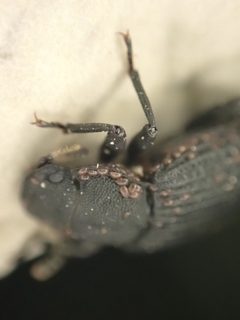
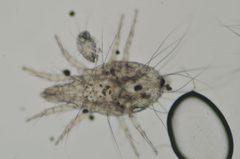
Pronunciation
How to pronounce Acaridae: /əˈkɛrəˌdeɪ/
These audio files are automatically generated. While they are not always 100% accurate, they are a good starting point.
Identification
are distinguished from related by features including the presence of a phoretic deutonymph stage in many —a non-feeding nymph specialized for by riding on larger animals. are typically small, soft-bodied mites with reduced . The family can be differentiated from other Astigmata families by chaetotaxy patterns and genital structure, though precise identification requires microscopic examination. are distinguished by leg chaetotaxy, palp structure, and body setation patterns.
Images
Habitat
Natural include soil, leaf litter, animal nests, and decomposing plant material. Artificial habitats include human dwellings, granaries, greenhouses, plant nurseries, stored food facilities, and plant tissue culture laboratories. Some lineages are specialized: *Acarus* inhabit nests of warm-blooded animals; *Tyrophagus formicetorum* and relatives occur exclusively in nests; *Histiogaster* species live subcortically beneath bark.
Distribution
. with worldwide distributions include *Acarus*, *Sancassania*, and *Tyrophagus*. Documented occurrences include Europe (Denmark, Norway, Sweden, England and Wales), Asia (India, China, Iran, Turkey), Africa (South Africa, Algeria), North America (United States, Vermont, Mexico), South America, Australia, New Zealand, and Cuba.
Seasonality
vary by . In agricultural settings, * robini* reaches peak in bulbs during May and June. Stored product pests thrive year-round in suitable conditions, with explosions possible in humid environments.
Diet
Many are feeders on decomposing organic material, fungi, and . Some are facultatively phytophagous, feeding on living plant material including bulbs, roots, and ornamental plants. Specialized diets include: fungi (subcortical *Histiogaster* species); dead beetles and mushrooms (certain *Sancassania* species); and specific associations with nests or nests.
Host Associations
- Allium cepa - pestonion bulbs, major crop damage
- Allium sativum - pestgarlic bulbs
- Lilium - pestbulb crops
- Hyacinthus - pestbulb crops
- Formicidae - commensal*Tyrophagus formicetorum* lineage exclusively in nests
- Scarabaeidae - phoretic*Sancassania* ride phoretically on live beetles, feed on dead beetles
- Apoidea - commensalcertain *Sancassania* associated with bees
- Rodentia - commensal*Acarus* inhabit rodent nests
- Aves - commensal*Acarus* inhabit bird nests
Life Cycle
includes , larva, , tritonymph, and stages. Many possess a phoretic deutonymph—a non-feeding stage that rides on larger animals. *Tyrophagus putrescentiae* completes development in approximately 8.75 days (egg: ~4.5 days; larva: ~1.5 days; protonymph: ~1.3 days; tritonymph: ~1.3 days) under laboratory conditions. time is approximately 29.5 days with of 0.11 individuals per female per day. Some *Tyrophagus* species lack the deutonymph stage entirely, dispersing as feeding stages instead.
Behavior
is a key : deutonymphs attach to larger animals to reach new . Hyperphoresy (riding an animal that is itself riding a third animal) has been documented, with acarid deutonymphs on Uropodidae mites on beetles. Non-phoretic disperse by active movement or air currents. Stored product pests aggregate in humid conditions on damp materials.
Ecological Role
Decomposers in natural , contributing to nutrient cycling through consumption of fungi and decaying organic matter. In agricultural and storage ecosystems, many become pests causing significant economic damage. Some species fungi and bacteria in plant tissue culture laboratories. Certain lineages have evolved specialized commensal or parasitic relationships with insects and vertebrates.
Human Relevance
Major pests of stored products: **, *A. farris*, *Tyrophagus putrescentiae*, *T. longior*, and *Tyrolichus casei* infest grains, flour, dried fruit, milk products, hams, cheeses, straw, animal hides, and animal feed. ** and *T. longior* damage living plants, particularly bulb crops and ornamentals. Can cause dermatitis in humans through piercing attempts to feed or via contact allergens. Contaminants in plant tissue culture laboratories.
Similar Taxa
- GlycyphagidaeAlso Astigmata mites with similar and phoretic deutonymphs; distinguished by body and chaetotaxy patterns
- HistiostomatidaeAstigmata with phoretic deutonymphs; differ in feeding apparatus structure and preferences
- Pyroglyphidae; overlap in human-associated but differ in and specific habitat preferences
More Details
Taxonomic Note
The belongs to the superfamily Acaroidea within the suborder Astigmata. The title of one source incorrectly places Phytoseiidae and Tetranychidae within Acaridae; these are separate families in different superfamilies.
Economic Impact
Stored product acarids thrive in humid conditions; management requires humidity control and proper storage practices. * robini* can sustain vitality at 35°C, contributing to its persistence in storage and greenhouse environments.
Phoretic Specialization
The deutonymph stage represents a distinct strategy for . Its presence or absence varies among and even lineages, reflecting different ecological strategies.
Sources and further reading
- BugGuide
- Wikipedia
- GBIF taxonomy match
- iNaturalist taxon
- NCBI Taxonomy
- Catalogue of Life
- FEEDING POTENTIAL OF EUSEIUS OVALIS (EVANS) (ACARIDAE: PHYTOSEIIDAE) ON TETRANYCHUS MACFARLANEI BAKER AND PRITCHARD (ACARIDAE: TETRANYCHIDAE) INFESTING OK
- Revision of Tyroborus Oudemans, 1924 (Acari: Astigmata: Acaridae)
- The biology and population dynamics of the bulb mite, Rhizoglyphus robini Claparede (Acari: Acaridae)
- In vitro life table of the storage mite Tyrophagus putrescentiae (Acari: Acaridae)
- Second Palearctic Record of the Genus Stereoglyphus Berlese (Acari: Acaridae) with Morpho-Molecular Description of a New Species from Zagros Mountains, Iran.