
Apterocyclus honoluluensis
Waterhouse, 1871
Kauai Flightless Stag Beetle
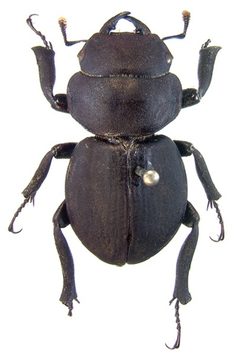
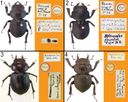
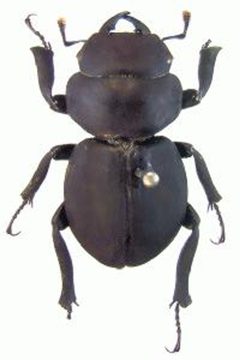
Apterocyclus honoluluensis, the Kauai flightless , is a flightless stag beetle to the Hawaiian island of Kauai. It is the smallest and most commonly encountered in its , with measuring 14–17 mm, rarely reaching 21 mm. The species has declined due to by introduced mice and loss, and was considered for protection under the U.S. Act in 1994 but was declined due to insufficient data.
Pronunciation
How to pronounce Apterocyclus honoluluensis: /æpˌtɛrəˈsɪkləs ˌhoʊnoʊˌluːˈɛnsɪs/
These audio files are automatically generated. While they are not always 100% accurate, they are a good starting point.
Identification
Distinguished from other Apterocyclus by its smaller size (14–17 mm versus larger dimensions in ). The flightless condition and occurrence on Kauai further separate it from potentially sympatric stag beetles. Other Apterocyclus species on Kauai include A. deceptor and A. kawaii, which are larger.
Images
Appearance
Small with body length of 14–17 mm, occasionally up to 21 mm. As a member of the Apterocyclus, it is flightless with reduced or absent wings. typical of stag beetles is expected, with males possessing enlarged .
Habitat
Found in areas with decomposing wood, specifically soil containing rotting trunks of Acacia koa. Larval requires moist, decomposing wood substrate; larvae are sensitive to heat and cannot tolerate high temperatures.
Distribution
to the island of Kauai in the Hawaiian Islands. Historically known from various locations across the island.
Diet
Larvae feed on decomposing wood, specifically the rotting trunks of Acacia koa. diet not documented.
Host Associations
- Acacia koa - larval food sourceDecomposing trunks required for larval development
Life Cycle
Larvae develop in soil containing decomposing wood. Larvae are sensitive to heat and can be killed by high temperatures. Specific details on and not documented.
Behavior
Flightless; are ground-dwelling. Heavy by introduced mice has been documented as a significant mortality factor.
Ecological Role
Decomposer; larvae process decaying wood of Acacia koa, contributing to nutrient cycling in forest .
Human Relevance
Subject of conservation concern; considered for listing under the U.S. Act in 1994 but declined due to insufficient data on vulnerability. Threatened by loss and introduced , particularly mice.
Similar Taxa
- Apterocyclus deceptorLarger congeneric also occurring on Kauai; A. honoluluensis distinguished by smaller size
- Apterocyclus kawaiiLarger congeneric on Kauai; A. honoluluensis is notably smaller
- Other LucanidaeFlightless condition and small size distinguish A. honoluluensis from most other stag beetles
More Details
Conservation Status
Considered for protection under the U.S. Act in 1994 but declined due to insufficient data on vulnerability (Federal Register Volume 59, Number 219, Pages 58982–59028, November 15, 1994). by introduced mice is a documented threat.
Historical Abundance
Historically the most commonly found of Apterocyclus on Kauai, though current status is uncertain given limited recent observations.